Qubert Sleeps
1 media/20260322_142034_optimized_2000_thumb.jpg 2026-04-09T23:44:57+00:00 Leah Cassidy 5ad486626b027b033a45db00d43f52c6a50eed53 65 1 Cassidy, Leah. Qubert Sleeps. 22 March, 2026. Author's personal collection. plain 2026-04-09T23:44:57+00:00 Leah Cassidy 5ad486626b027b033a45db00d43f52c6a50eed53This page is referenced by:
-
1
media/20260407_162211 Copy.jpg
2026-04-07T17:52:53+00:00
An Indigenous Re-invention of Romanticism & The Anthropocene
44
visradial
2026-04-11T22:20:31+00:00
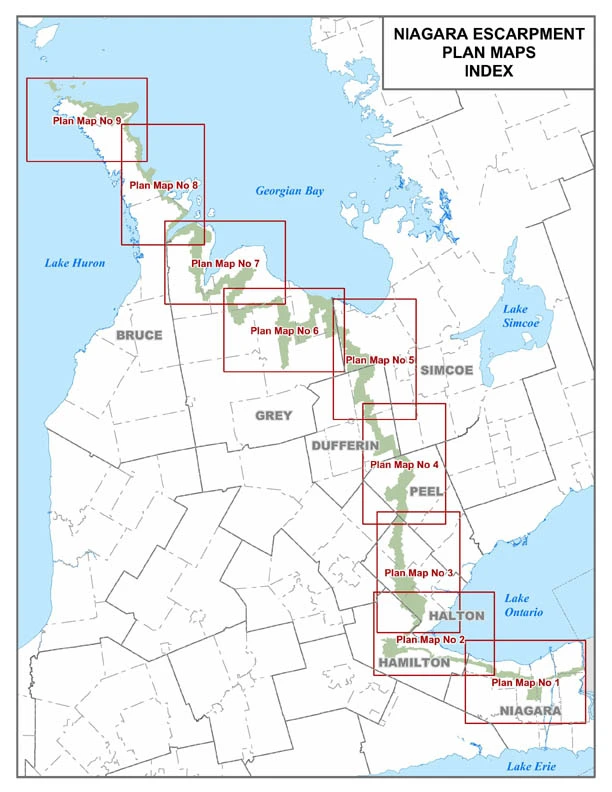
We all have our own conceptions of nature. Whatever those may be we all live in the natural world, some of it more "natural" than others. Some of these natural places only exist because of conservation. A photographic slideshow has been composed of several of these such areas by myself, Leah Cassidy. Viewers are taken on a journey through the conservation region of Halton, a region only 50km west from Toronto. The auditory element to the slideshow are sounds captured by the artist while hiking Rattlesnake Point, one of the conservation areas displayed in the slideshow. The slideshow's purpose is to serve as an immersive experience in nature for viewers while keeping in mind that these are not far-away, unreachable places but exist within our reach at the borders of our urban spaces.
Photographic Slideshow
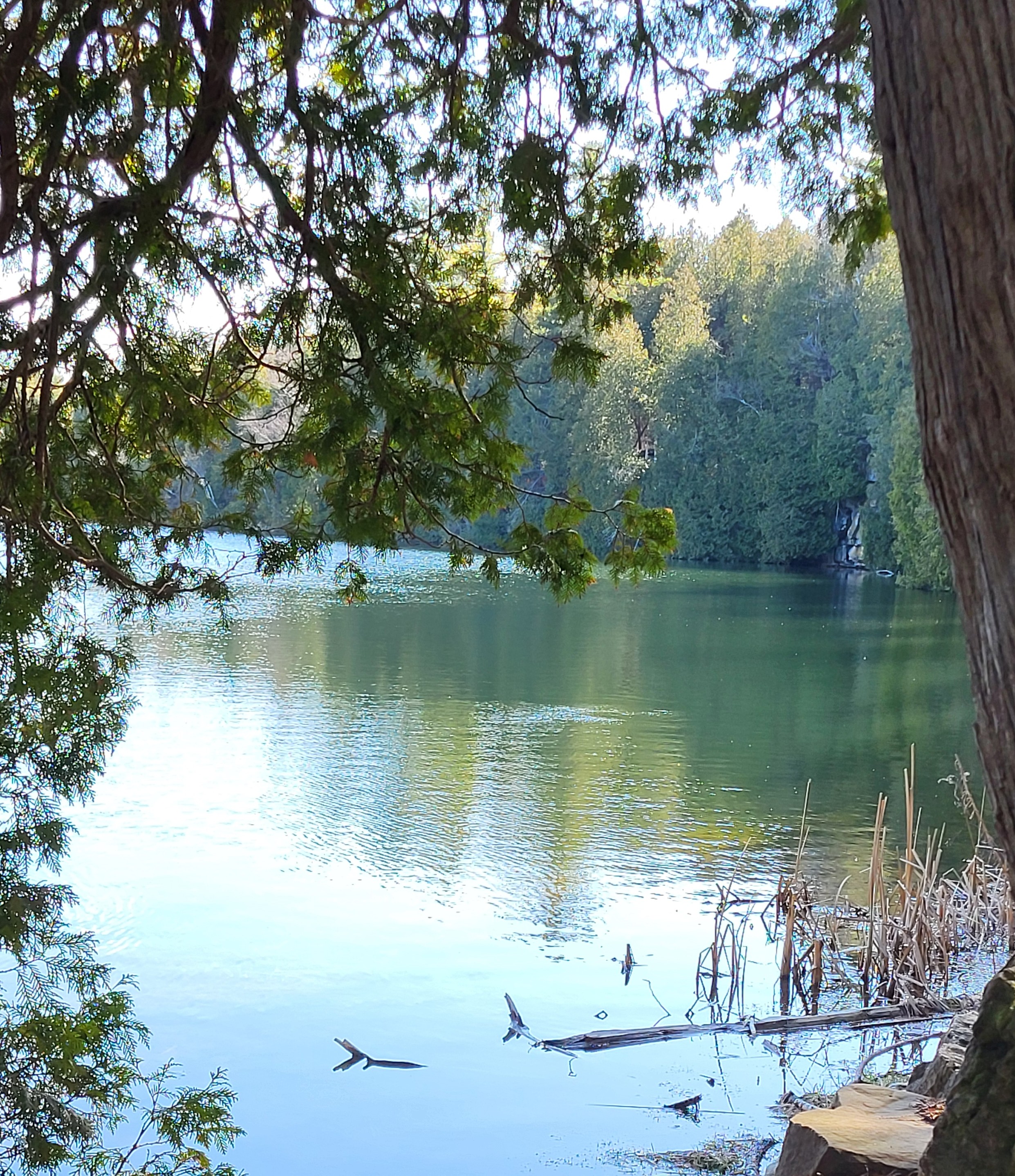
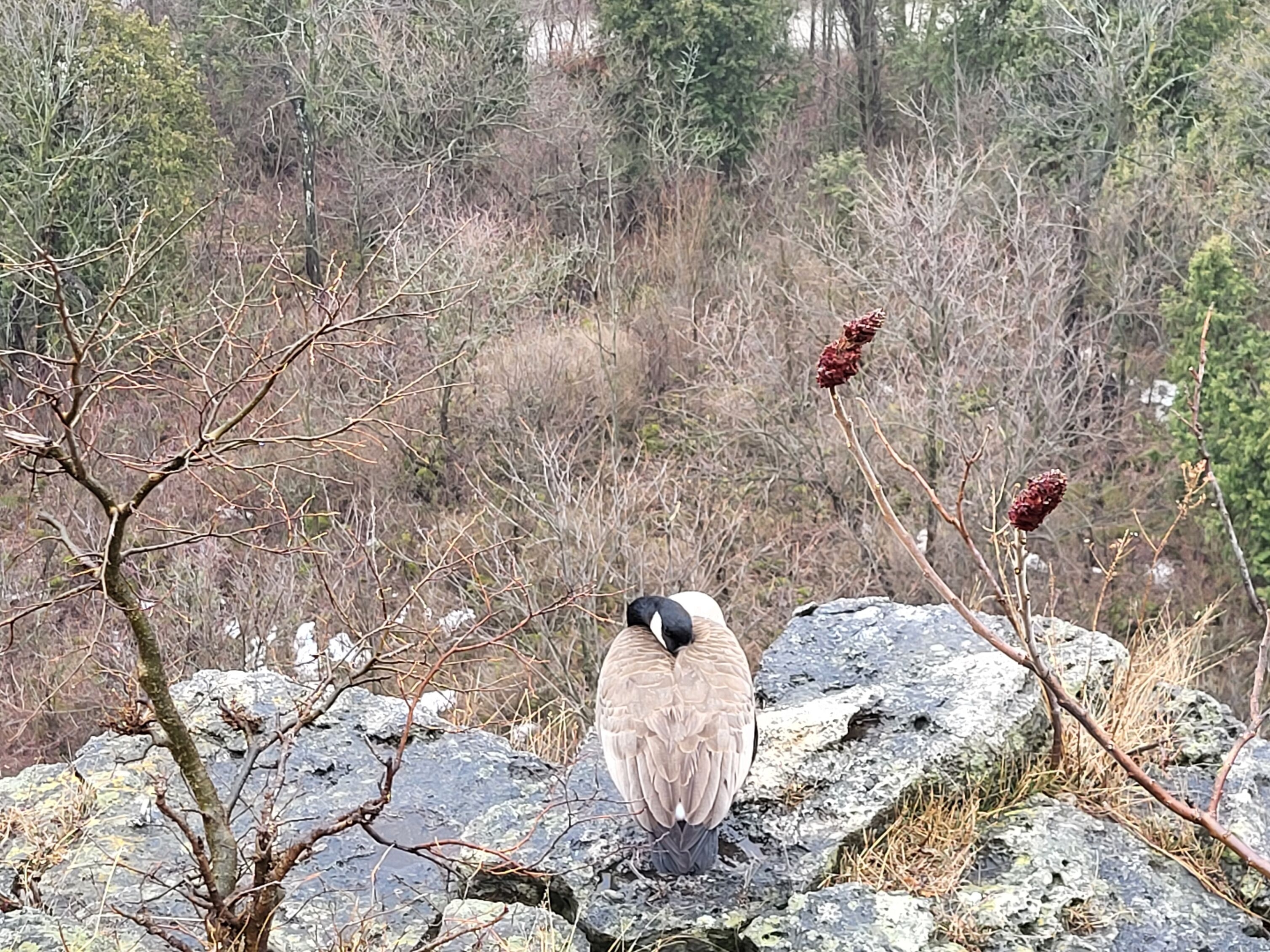
The slideshow began with the photographed perspective of a Canada goose, Qubert, as he/she looked out from a cliff on the Niagara Escarpment [see Figure 1]. Qubert looks out on a landscape that is rich with evidence of the current geologic era -- the Anthropocene. Qubert belongs to the category of nature that the Anthropocene could have a drastic, permanent change on. The current trends in humanity and its goals are to continue applying Western perspectives, attitudes, and values to our relationship with the land. In the late 18th century to late-mid 19th century, a Western movement called Romanticism emerged. Romanticism was a period in which nature was viewed as sublime, but it placed nature's significance as being reliant on its identity as a subject to be manipulated by the human viewer. Romanticism created a human-centric relationship with nature in which human domination was enforced and still is today under our current social era of capitalism.
Photographic Slideshow
How does our perspective change when we are just looking at nature for all of the parts that compose it rather than seeking to philosophize nature? How does it change when we stop categorizing nature as a resource but as a force that demands reciprocity and continuity?
Crawford Lake - a poem by Leah Cassidy
The air is cold, most trees are bare
The shining sun does not warm the earth
A lake surrounded by and colored green,
A hill nearby once home to Iroquois hearth.
A lake whose water layers do not care
To meet. A lake whose surface’s sheen
Hides layers of soil forever altered by the
Anthropocene.
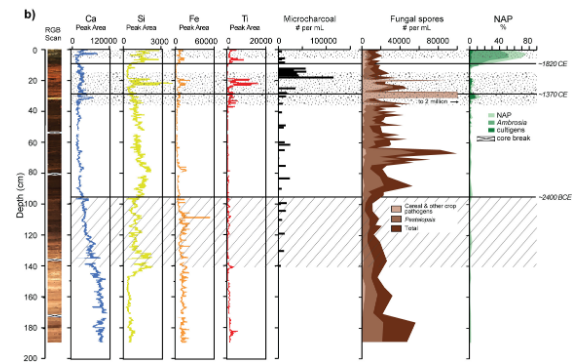
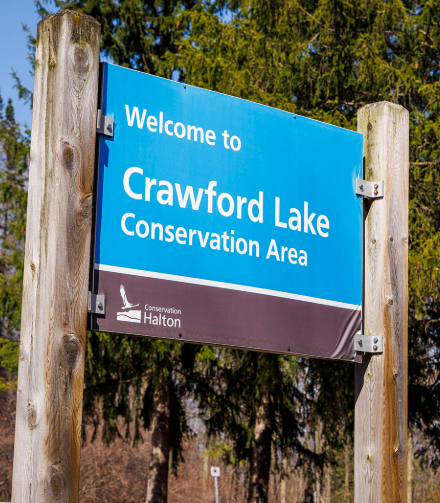
The conservation area that the photographic slideshow ended with is Crawford Lake Conservation Area. Crawford Lake is a rare meromictic lake. A meromictic lake's top layers of water and bottom layers of water do not mix which means that whatever makes up the soil in the lakebed will be stacked like time accurate, unchanging layers of a cake [See Figure 3]. Each layer of Crawford Lake's soil bed contains whatever materials sunk straight to the bottom of the lake from thousands of years ago to today. It is these layers that display the Anthropocene. Indigenous farming from the 13th century Iroquoian village (a restoration of which exists at Crawford Lake today and can be seen in the slideshow) increased nutrients within the soil while the period of incessant nuclear bombing and a colonial sawmill nearby pumped heavy metals and chemicals into Crawford Lake's soil bed.
Crawford Lake not only represents the Anthropocene, it represents the negative versus positive-neutral changes that different human activities have on nature. Indigenous civilizations then and now have a relationship with nature that is reciprocal. A relationship in which the Earth's existing resources are not taken without giving back. The presence of microcharcoal in Crawford Lake's soil is representative of Indigenous farming traditions to burn underbrush so as to ensure crops flourish for next season. While Crawford Lake no longer serves as a human-populated space, it is as a conservation area within the Greater Toronto Area that regularly provides a space for Indigenous voices to share land traditions, teachings, and guidance.
Crawford Lake serves as the catalyst that demands Western society re-invent where humans stand in the human/nature relationship. Humanity was not meant to dominate and extract from nature. Canadian Western society has played its damaging part in the Anthropocene. The Anthropocene must now by shaped by those who have acted as the land's stewards not abusers. The Indigenous priority has always been and continues to be ensuring the cycle of life for all processes of life to flourish for endless generations to come. Groundwork for Indigenous-led conservation, land-planning, and land protection efforts exists all over Canada.
Canada needs change. That change needs to be Indigenous-led. You have been immersed in conservation that is sectioned off and protected from humanity else it be torn down and destroyed for the sake of urbanization, capitalism, and industrialization. Indigenous conservation attempts are vital to the rejection of human domination in nature and the adoption of a reciprocal relationship that safeguards all organic aspects of our world from the land to the sea. It is Indigenous land practices that will reinvent the Anthropocene to be an era in which we will erase no more beings from nature. Do what you can to ensure that beings like Qubert can sleep soundly knowing we will not allow the Anthropocene to destroy them.
Copyright statement: Images in this online publication are either in the public domain or are being used under fair dealing for the purpose of research and are provided solely for the purposes of research, private study, or education.