Dinner Scene
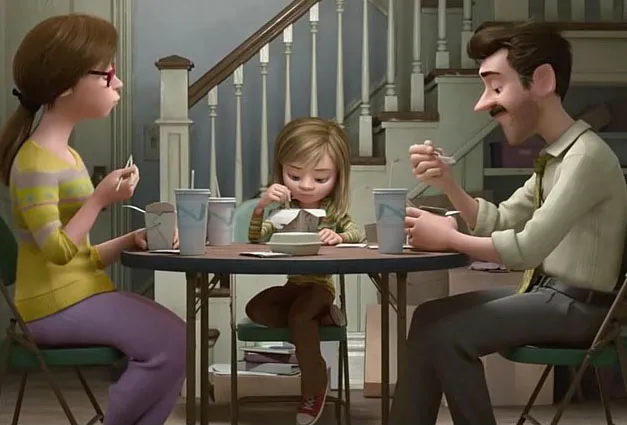
1 media/Dinner Scene_thumb.webp 2026-04-15T05:29:10+00:00 Aiman Shokat 8f5e23046006f3bee5979eecc4d9d41ebb7ae820 87 1 “Images in this online publication are either in the public domain or are being used under fair dealing for the purpose of research and are provided solely for the purposes of research, private study, or education.” Riley and her parents eating dinner. plain 2026-04-15T05:29:10+00:00 Aiman Shokat 8f5e23046006f3bee5979eecc4d9d41ebb7ae820This page is referenced by:
-
1
2026-04-15T05:13:01+00:00
Evaluating Inside Out (2015): An Analysis of Characters and Techniques portrayed in the animated film
20
This paper focuses on Riley’s emotions are affecting her, the speculations offered by critics, and the different angles and other techniques.
plain
2026-04-22T04:26:42+00:00
Introduction
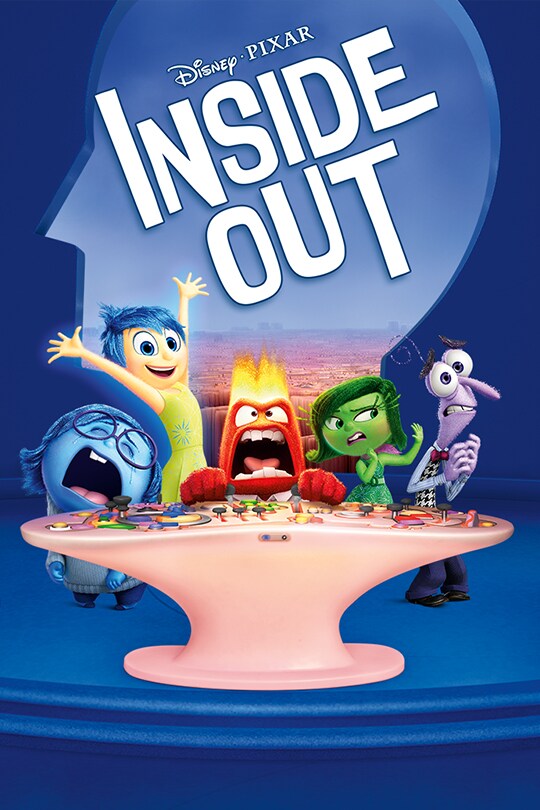
Many films convey crucial lessons, particularly in animated films produced for young individuals. When children view cartoons, animated films, or read books, some will follow the content that is portrayed as they are at a learning age. Children can quickly learn certain actions without comprehending whether they are suitable or will cause trouble. For instance, a child’s environment matters a lot in shaping them; some might grow up in an environment that promotes positivity, and others might encounter various challenges due to the individuals they are surrounded by. However, if the children are taught valuable lessons, they might be eager to learn them and abide by them through a positive approach, rather than strictness. A positive approach matters a lot for children, as they are young and can pick up on harshness, and might recall it over time if an individual's behaviour does not change with them. One should promote positivity around children and only react with a bit of strictness if a child continues to ignore and causes trouble for themselves and others. Inside Out (2015) is an animated film presented by Pixar and Disney that portrays Riley, the main character, and her emotions (characters) experience various challenges after she moves to San Francisco with her parents. Moving to a new place changed Riley and her emotions; they began behaving differently and were unable to function adequately due to multiple obstacles occurring. In this paper, I will examine how Riley’s emotions are affecting her, the speculations offered by critics, and the different angles and other techniques. For instance, Riley encounters obstacles as she tries to settle into the new city; critics provide feedback on the film, specifically discussing whether it is good for young individuals, and the different types of angles and other technologies used to produce Inside Out.
Emotions and their Impact
Animated films convey crucial lessons that young individuals and adults can easily grasp through the visual art presented. The films require a lot of effort, creativity, and talent to ensure individuals can enjoy them. Inside Out (2015) is an animated coming-of-age film that depicts a young girl struggling to rebuild her social life in San Francisco after moving there with her parents. For instance, making new friends, going to a new school, learning her surroundings, and other aspects to fit into the community. Many young individuals struggle to settle into new spaces, and Riley is one of them. Riley and her emotions (characters), such as sadness, joy, anger, disgust and fear, are trying to work together to rebuild a new social life. However, sometimes particular emotions can dominate others and suggest new ways to look at life. In one of the scenes from the animated film, particularly focusing on the dinner scene (00:26:45-00:30:00) where Riley’s parents tried asking her how her day was, she did not want to reply because she was sad. Joy and Sadness the two emotions (characters) were not present in the headquarters to ensure Riley is functioning adequately. Riley was not behaving as she usually would and did not reply to her parents; instead, she reacted harshly, and she was sent to her room. The dinner scene suggests that sometimes children need space to focus rather than being pestered by individuals around them. Everyone is aware of how parents can sometimes behave toward their children; however, if one is already aware that their children are dissociating due to sudden changes. Then one should wait until their child reaches out for assistance or until they are in a stable place. Joy and Sadness not being present in the headquarters plays a crucial role, as Joy cannot show Riley the positive memories of her and her loved ones spending time together, despite the changes. If Sadness steps in and portrays a memory that is not joyful, and Joy steps in to balance the emotions, both can ensure that Riley’s feelings are seen rather than ignored. Additionally, the dinner scene is a focal length shot that captures Riley and her parents as they eat and try to start a conversation. A medium close-up shot is used as well in the animated film as Riley’s parents react to her becoming angry. These angles used for filming portray genuine reactions from parents when their child does not behave adequately. Those angles also highlight the similarities between animated characters and humans in how they react in certain situations. The technology and various techniques used to assemble an animated film are quite fascinating.
Furthermore, Inside Out (2015), an animated film, presents Riley and her emotions as they try to survive in a new city, as she has a lot of work to do, including rebuilding her social life at the new school. She misses her best friend Meg from Minnesota and is trying to keep herself together. However, her emotions are all over the place, and she keeps recalling her old memories. In the paper, CHARACTER AND CHARACTERIZATION IN THE FILM INSIDE OUT BY PETER HANS DOCTOR, Hendarsyah (2020) focuses on media informing, entertaining and communicating with the viewers. Hendarsyah (2020) states, “Fear is portrayed as a character who always protects Riley and always makes sure Riley is safe, fear will always think of various possibilities that are dangerous,” (29). This statement suggests an emotion (character) protects Riley whenever he can, which is accurate, as fear wants Riley to live adequately. Despite encountering challenges, fear makes decisions that assist him in protecting Riley, conveying stability in the animated film. For instance, each character that is portrayed in the film, particularly focusing on the emotions, wants Riley to function well with the decisions they make and through the encouragement or memories she obtains from the headquarters. Hendarsyah’s paper conveys the message that entertainment, such as an animated film, can assist individuals in comprehending that our emotions work effectively, allowing us to function appropriately when encountering challenges. Through emotions, one can make decisions that leave a lasting impact on one's life. Although fear might stop one from acting in certain ways, it is there to protect. However, making bold decisions opens new ways for individuals to live without worrying. Every emotion matters; however, it should not stop someone from living their life to the fullest or from making new memories whenever they can. Riley’s emotions do impact her as she recalls the old memories or wants to try something new.
Scholarly and Viewer’s Critiques
Furthermore, Inside Out (2015), an animated film, presents scenes that some critics might like or dislike, depending on how they view it for young audiences. Some scholars might enjoy the film's characters and crucial lessons. However, others might dislike them because of the characters' behaviour, or they didn’t enjoy the film overall. Critics might offer insights into specific elements of the film that a regular viewer might not have comprehended while watching. In the paper, The Development of Semantic Processing In Children’s Emotional Advancement: An Analysis of the Movie “Inside Out”, Quratulain et al. (2024) focus on the semantic processing in children by analyzing the animated film and conducting both qualitative and quantitative research with 30 young individuals. Quratulain et al. (2024) state “In the first place, the research highlighted the capability of cartoon films as strong education aids that can effectively capture the interest of children and aid their cognitive and emotional development,” (53). This statement is accurate, as young individuals can easily grasp what is portrayed to them through the media, whether it is educational or not. It does assist in developing their personalities. For instance, many individuals suggest that young individuals will view adults committing certain actions and will follow them, such as reading a book, watching television, or using a phone. Children will follow adults' actions, whether or not they are suitable, and those actions will become part of them as they reach a certain age, when they will understand the difference between moral and immoral actions. Additionally, the young individuals who viewed this film will comprehend the challenges encountered by Riley and her emotions, and why she behaved in certain ways when addressing the issues. Those children might also comprehend that Riley and her emotions (characters) did not give up easily despite the barriers that occurred throughout the film. They will grasp the lesson of reaching out for assistance whenever needed. Young individuals will also learn that expressing emotions is appropriate and quite helpful, rather than keeping them to themselves and suffering. As stated earlier in the paper, young individuals struggle when they encounter change; however, expressing emotions and indicating that one does not like change is sufficient, as it helps their loved ones comprehend that they need assistance.
Inside Out (2015) portrayed various scenes that were intrusive, humorous, heart-touching, brave and therapeutic. In comparison to the other academic paper, some critics might not like the behaviour of the characters or how certain elements appear in the animated film. Which is quite insightful, as some scholars might know more about certain individuals' behaviour and actions than others. Scholars conduct research, and that research assists individuals in comprehending what is beneficial for children to view and what is not. Particularly for parents and other adults responsible for young individuals, who may not have enough time to review what is appropriate for a child to watch. In the paper, The Types of Impoliteness in “Inside Out” The Movie, Daffa and Mhd (2023) focus on the impolite actions of the characters from the animated film by conducting a qualitative study. Daffa and Mhd (2023) claim, “Joy doesn't really like sadness, because she thinks sadness can make Riley's day feel sad and bad. here the speaker uses coercive impoliteness because the speaker has the power to keep Riley from being sad,” (429). This statement is accurate as Joy dominates over other emotions and focuses on keeping Riley happy. Joy’s actions caused trouble for herself and sadness several times, and it is quite unfortunate, as Riley has to experience it as well. Riley and her emotions (characters) have to work together to function; without the emotions, she wouldn’t be able to make decisions effectively. For instance, if Joy does not dominate other emotions and work well with them, then Riley will be able to live adequately rather than being controlled and confused by one emotion. Additionally, individuals or even characters cannot function with only one emotion, as others need to step in as well. Living constantly with one emotion is not accurate, as other emotions need to be experienced as well to live adequately, make crucial decisions, or experience certain moments in life. One cannot stay stuck with a singular emotion. Constantly being ruled by one emotion will not assist individuals in discovering other things, as it will confuse them and prevent them from determining whether the decisions they are making are adequate for them.
Scholarly critiques view the film through an academic perspective; however, individuals who enjoy watching TV series, regular films, animated films, and other forms of entertainment view it for relaxation or as a hobby, and their critiques provide a perspective that scholars might not focus on. Non-scholarly reactions also assist individuals in determining whether films and other forms of entertainment are suitable for children or adults to view. In the article, In praise of Sadness: the healing insight of “Inside Out,” Seitz (2015) provides his perspective on the character Sadness from the animated film. Seitz (2015) states “Inside Out” stands in opposition to an entire culture that tells people that happiness is the highest, best and sometimes only permissible emotion, and that sadness is an obstacle to being happy, and that we should concentrate all of our emotional and cultural energy on trying to eradicate sadness so that everyone can be happy.” This statement suggests that balancing emotions works better than relying on just one emotion, which is accurate, as Joy and Sadness are observed to be in conflict rather than working together. However, changes occur later as the emotions (characters) realize they need to rely on each other rather than rely on themselves. Additionally, Seitz's perspective is accurate regarding the emotions in the animated film; our emotions reveal our personality and reflect our reality. His perspective suggests that one should view this film as it conveys meaningful messages that encourage individuals to be themselves rather than only putting on a happy face and going on with it.
Seitz's perspective also focuses on decision-making that intertwines with one’s emotions. He discusses how he has made decisions out of sadness, which is unique, as not many individuals discuss their perspectives on emotions. Seitz suggests that, as situations evolve, one should not focus solely on one emotion. It is acceptable to feel other emotions while encountering challenges, as both the positive and negative can assist in overcoming the barriers one faces. For instance, at first one might feel overwhelmed by one emotion; however, other emotions can dominate one's mind, allowing them to feel fine and ensuring that the situation they are enduring will be over whenever they are ready to end the challenges by finding solutions. Seitz (2015) claims, “A big part of learning to listen to yourself is realizing that you shouldn’t just listen to one emotion. Just as it’s possible to hold two seemingly contradictory points in your mind at the same time, it is possible to listen to two seemingly contradictory feelings, and you might draw a better conclusion as a result.” This statement suggests that other emotions can assist in making better decisions, which is quite accurate, as sometimes the pros and cons of a situation can lead to decisions that might not make sense at first but will later. For instance, joy became a bit aggressive whenever sadness touched the memories; however, after visiting the long-term memories and observing that Riley needs other emotions in life as well. Joy’s perspective changed, and she began to work well with sadness and other emotions.
Techniques in the Animated Film
Producing a film is quite challenging; assembling an animated film is even more challenging, as it requires significant effort from various departments, including screenwriters, artists creating animated characters, voice actors, editors, and many others. Those assembling the characters need to sketch them in specific ways, use colours and lighting, film from specific angles, and bring them to life. In the paper, Visual, Auditory, and Psychological Elements of the Characters and Images in the Scenes of the Animated Film, Inside Out, Son (2021) focuses on colour theory, music psychology and developmental psychology portrayed in the film. Son (2021) states, “From a visual aspect, each character’s role is also revealed in important pieces of clothing. Along with color, the costumes—themselves a type of shape—clearly demonstrate each character’s role,” (230). This statement suggests that each character's role is crucial to the film, along with their appearance, which is accurate because the emotions (characters) colours fit adequately with the role they are playing. For instance, the colour red is associated with the emotion of anger, and in this film, Riley’s anger is portrayed by a character in red. Colours are often used in modern filming technology to ensure individuals comprehend the visual art being portrayed.
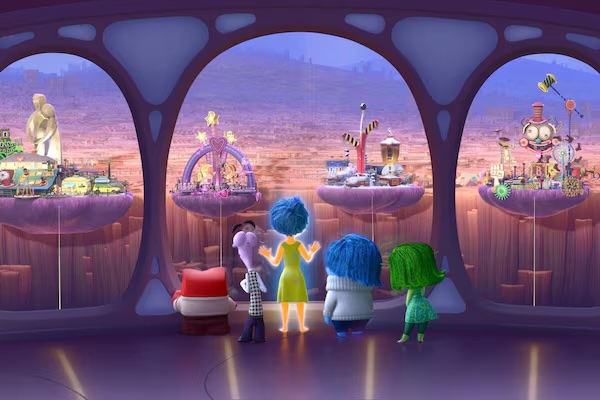
Furthermore, animated films that are produced require various technologies to ensure the details are captured adequately, as for the regular film with individuals the details can be edited or reshot. In the article “Camerimage: Pixar’s Patrick Lin on the Cinematography of ‘Inside Out’,” Barraclough (2015) focuses on the details provided by the director of photography, Patrick Lin regarding the animated film. Barraclough (2015) claims, “The camera, although virtual, is “mathematically true… to a real camera,” Lin said. “It has lenses, focal length, F-stop, lens distortion, and depth of field.” This statement suggests the various types of angles used to film the animation, which is accurate as many of the scenes had depth of field angle. For instance, in the headquarters, all the emotions stand together, looking at the islands of personality (00:5:48-00:5:52). That scene can be linked to depth of field, and it is quite magical to see all the emotions standing together, looking at Riley's memories, whom they care for a lot. The depth-of-field angle provides a unique perspective, allowing viewers to comprehend the specific angle that captures the emotions (characters) and the islands in the background or ahead of the emotions perfectly. The specific angle also allows viewers to observe the island's aesthetics, with several colours, designs, and the characters' reactions. In the scene, Joy glows as she views the Island with happiness and pride. She is genuinely happy to see Riley’s memories and personality functioning well. As for the other emotions (characters), they listen to Joy and observe the island closely as soothing yet happy tunes play in the background, as Joy explains why the islands are crucial for Riley. Despite each emotion (character) portraying their personalities, they all care deeply for Riley’s well-being. Even though they think and react differently, they want stability for her.
Speculation of the Film
I viewed Inside Out (2015), when I was a teenager and enjoyed it as many others did. However, I did not think about it as profoundly as an adult would. Adults view specific things thoroughly, as they have experience; however, a child learns more as they grow or encounter similar experiences in their childhood, which might allow them to shape into better individuals. It can also assist them be aware of similar situations that may arise in the future. However, they have a solution then, as they have already experienced the challenges. The voice actors played their roles quite well, thoroughly bringing the characters to life. I enjoyed observing sadness, joy, anger, disgust, and fear work together to ensure Riley is happy and isn’t encountering challenges. However, challenges did occur, as the emotions (characters) needed to consider their behaviours, especially around others. How their behaviours might be negatively impacting Riley’s life, creating more issues for her. The scenes that portrayed joy and sadness in the aesthetic islands and the long-term memories maze during their adventure were magnificent due to their colours and designs. Each detail was portrayed sufficiently, and the angles used in filming can make viewers feel as if they are part of the ongoing adventure. The reactions portrayed are quite accurate of the ones we humans experience whenever we react to situations, whether positive or negative. I disliked how Riley had to move to San Francisco and how joy dominated the other characters. One thing I wished was that sadness should have immediately told joy that she did not like her behaviour and that she should stop making decisions for her. Also, sadness should have told joy that Riley can experience more than one emotion. Furthermore, I was unable to comprehend back then that other emotions are necessary for individuals as well, rather than relying solely on joy. This animated film portrays every emotion (character) response to situations evolving, promotes a lot of positivity, and aims to ensure everything remains stable. However, it should also have focused on the reality that many individuals encounter challenges and are unable to obtain assistance, that situations evolve rather than remaining stable, and that always being joyful is not necessary, as there are many other emotions to experience. This film should have also portrayed that a child’s mental health and their perspective matter, as not many children can obtain assistance immediately or are heard. After reading scholars' speculations and an individual's perspective on this animated film, I realized that some things might change over time rather than immediately and that Pixar and Disney portray films that appropriately focus on children and their perspectives. As many situations in life, whether in reality or animation, cannot be dealt with solely in happiness, other emotions can become part of the situations and the memories. Children and adults should view this animated film, as it provides an accurate portrayal of how children might view their lives. The second part of the film also focuses on Riley encountering more challenges during her teenage years and on how other emotions become part of her personality as she grows. One can experience various emotions when encountering situations that might not have occurred earlier in life, but do now as one becomes an adult.
Conclusion
Considering the animated film Inside Out (2015) and its scenes, along with statements from other academic papers and articles, one can comprehend that animated films are crucial for young individuals and adults. Riley and her emotions played a critical role in shaping her adventurous life, balancing both positive and negative impacts. Scholars and viewers examined the animated film and conducted research to determine whether it is suitable for young individuals. The various techniques used to produce the animated film suggest a lot of effort and talent went into creating it for young individuals or for adults who are still children at heart. Inside Out (2015), an animated film, suggests that young individuals encounter challenges and experience emotions despite being viewed as young and unaware of certain things. Those severe emotions can leave a lasting impact on children and can alter their future. This film also suggests that it is acceptable to experience more than one emotion, as each emotion has its own way of assisting individuals during certain challenges. Along with how situations can improve when one tries their best to resolve them while balancing the emotions they experience in their lives. This film is suitable for children and adults to view, as it provides an adequate perspective on children and the challenges they encounter as they rebuild their social lives in a new space. It also helps individuals in comprehending that children can encounter challenges, despite some people not thinking that children can face the consequences of the decisions they make. This animated film also allows parents and those caring for children to comprehend that their behaviours can impact children, whether positively or negatively. Also, encourage children to express their perspectives and to take their time opening up rather than pushing them to do so. Children and their perspectives matter a lot especially if they are at the age where they comprehend everything.