How Greta Gerwig Utilizes Colour to Represent Nostalgia in Little Women
When Greta Gerwig set out to create a new adaptation of the widely appreciated and previously adapted Louisa May Alcott novel Little Women, she had a challenge at hand. Gerwig had to strategically set herself apart from the other well loved directors who had come before and already done adaptations of this adored novel. The aspect of her adaptation that differentiated herself from all the others, was the decision to insert a non-linear timeline. A powerful vision came to fruition when Gerwig told the story of the childhood and adulthood plotlines separately and made them distinguishable from each other by letting the colour grading act as a signifier to the audience. The different cool and warm toned scenes reflect the characters' arcs, personalities, and their mental stability. Primarily the adulthood scenes are drenched with cool toned blues and greys, reflecting the inner workings of the main character, Jo March. This film relies heavily on the theoretical framework of symbolic interactionism, and the idea that society will understand certain nostalgic based symbols and comprehend the emotions of the characters. Gerwig’s adaptation of Little Women stands out because she is able to tell the story in a new light that leans on visual storytelling, which allows for her to put emphasis on the nostalgia embedded in the story.
Greta Gerwig has had a long, phenomenal career in Hollywood and will seemingly continue this legacy for many years to come. Starting as an actress Gerwig appeared in films such as 20th Century Woman (2016), Frances Ha (2012), Damsels in Distress (2011), etc. before pivoting to directing full time, with the 2017 film Lady Bird. Although Gerwig had worked on projects directing in the past, Lady Bird was her breakthrough. Following the success of her solo directorial debut, Gerwig directed an adaption of Louisa May Alcott’s 1860s novel Little Women which was released in 2019, and following that came Barbie in 2023, a film that won the Cinematic and Box Office Achievement at the Golden Globes. Specifically the 2010’s are notably the years Gerwig's acting performances begin to mirror her directorial choices. It was around this time that she began to strategically align herself with famous names in filmmaking who tied her to mainstream media as well as the indie audience (Dorrian, 330). Gerwig was deliberately maneuvering through her career in a way that would set her up for success when she eventually made her directorial debut audiences would be tuned in. Upon its release, Lady Bird was “overwhelmingly celebrated [by critics]” (Warner, 299) establishing Gerwig as an impactful director through her first film, and it truly cemented her place in the film industry as she received her first Oscar nomination for Best Screenplay and Best Director at the 90th Academy Awards in 2018.
The attention from Lady Bird was kept by Gerwig's decision to create a new adaptation of Little Women, a story that had been adapted numerous times over the years. Considering there are many previous versions of Little Women it was imperative that Gerwig make a lasting impression by creating a fresh perspective with a gravitating narrative voice that could speak to her existing audience while branching out to those who may not be familiar with her. In her adaptation, Gerwig uses the emphasis on the themes of nostalgia for the simplicity and blissfulness of childhood throughout the novel to showcase the characteristics and development of the four sisters, Jo, Meg, Beth, and Amy. As Nataša Ninčetović points out, Alcott’s novel has a level of ambiguity to its messaging that “permits directors to find and focus on the aspect of the story that reflects the value system they consider valuable” (Ninčetović, 9), and Gerwig was able to adjust the story to fit the feminist, nostalgic lens that she has demonstrated and executed successfully in the past. Gerwig was able to differentiate her adaptation of Little Women from her precursors by telling the story in nonlinear timelines. This version of the story is split up into the childhood arc, where Jo, Meg, Amy and Beth are living in their childhood home during the Civil War with the mother who goes by Marmee and their maid Hannah, and the adulthood timeline that has Jo in New York, Meg married with children, Amy in Europe, and Beth extremely sick with scarlet fever. With a nonlinear timeline it is crucial to have the audience understand the difference between the past and present, a lot of films will do this by adding text saying the year or date, changing hairstyles and clothing, or rely on the settings being different, but Gerwig does something exponentially more interesting. She chose to compare the timelines by primarily using colour grading.
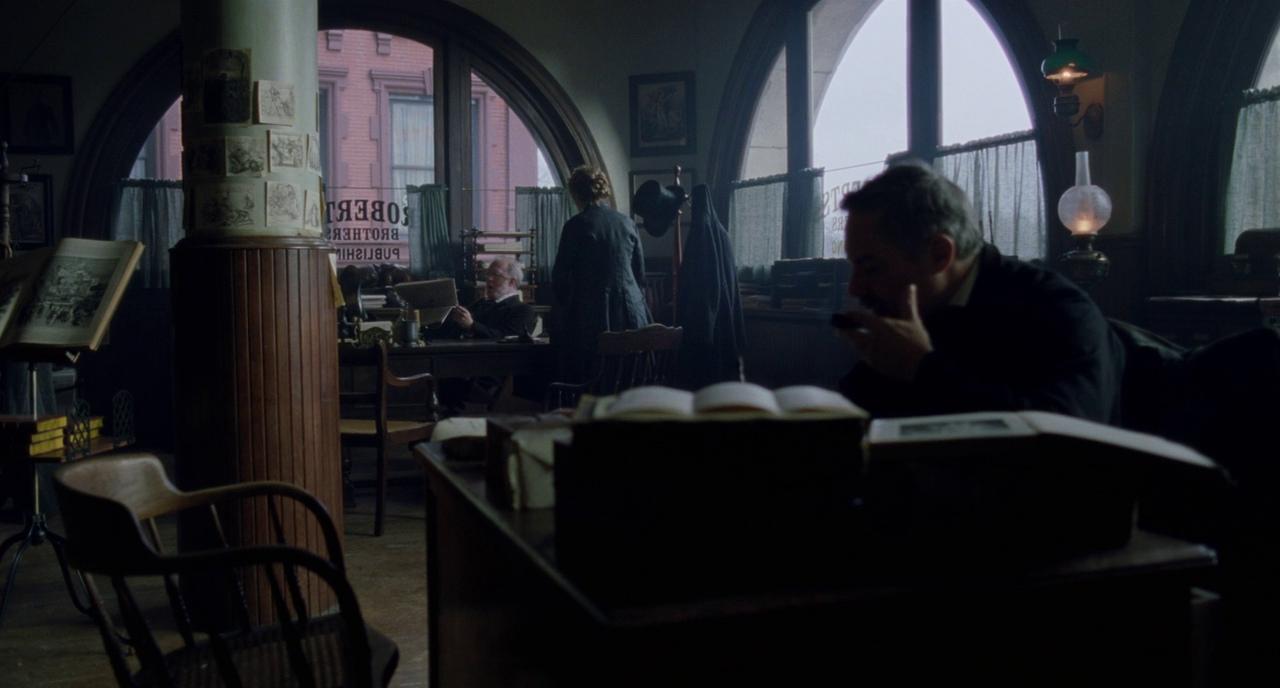
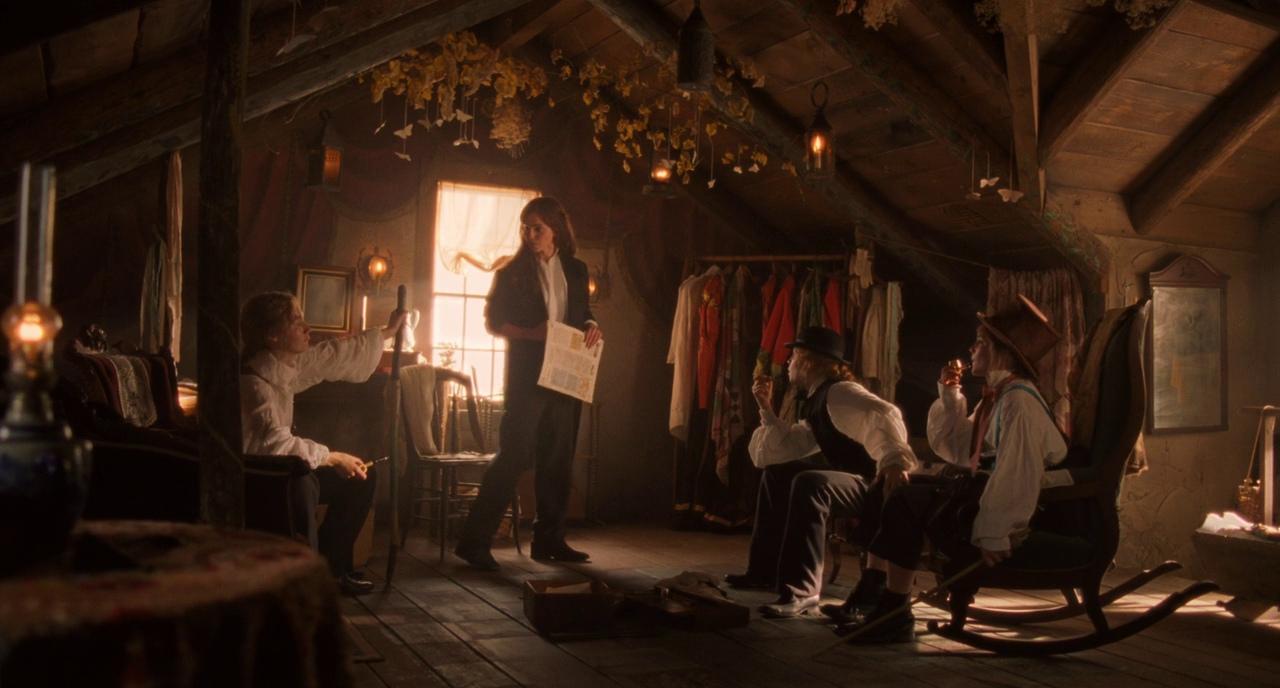
By deciding to implement a nonlinear strategy to a story that has previously only been told through a traditional timeline meant that Gerwig was straying far away from the original content that she was basing her film around while still staying faithful to Alcott’s novel (Ninčetović, 19). Naturally, by changing the format on which the story is told, the story itself is subject to changing slightly. Gerwig’s creative direction changes the story to highlight what each March sister longs for in life and how they had to let go of their childhood in order to achieve their success. The sisters with the most attention in Gerwig's adaptation are Jo and Amy, which is not drastically different from other adaptations since their sisterly rivalry is at the core of the novel. The film begins with Jo in New York attempting to become an author. The colouring of these scenes are cool toned, with bluish greys, dark greys, black and browns being at the forefront. Jo is dressed in all grey attire with her light blonde hair pulled back into a bun, which restricts the audience from seeing the abundance of golden hair she inherits from Marmee. Notably, the lamps in the room of the publishing house are not necessarily dim, but they are not dispelling warm comforting light (Fig.1). Unknowingly to the audience, Jo is far from home, without her family, living in a city much different from the town she was raised in. With the context of the later half of the film, it is clear that Jo does not want to let go of childhood despite her big dreams to become an author. Which places the mindset of Jo in a dreary place, yearning for a time where she could enjoy the presence of her sisters without any prejudices against them. The present day timelines of Jo give off an impression that she is constantly thinking of being back in Massachusetts with her family, and that she is stuck in the warm memories of childhood. Gerwig uses this theme of memories and nostalgia to break down what the character of Jo values the most in life, and this “non-linear narrative structure can [...] best develop characters in stories which are incorporating memory” (Saberi, 1). In fig.2 the March sisters are essentially playing dress-up pretending they are men working at a publishing house developing a newspaper story. This, despite coming much later in the film, is a parallel of Jo’s experience at the real publishing house in New York. This childish idea of what it would be like to be a man in power of creative minds like themselves is extremely contrasting to the reality Jo comes to find in her adulthood. This scene is much more warm toned. Despite the girls wearing similar clothing to the men in Fig.1, there are elements of fun with pops of colour in Amy's outfit specifically, as well as the colourful rack of clothing behind them. The light from the windows and lamps are drowning the girls' attic in a warm glow that exemplifies their connection to one another. There are also many nostalgia signifiers within this still, for example, the rocking chair Amy sits in, butterflies hanging from the ceiling, the girls dressed in oversized, baggy men's clothing that is presumably their fathers. These nostalgic aspects can be attributed to Gerwig being widely recognized as a ‘hipster’. Ryan Dorrian explains in Millennial disentitlement: Greta Gerwig’s post-recession hipster stardom that “hipsterism can be understood as a mode of restorative nostalgia, which emphasises an appreciation and attempted reconstruction of childhood.” (Dorrian, 336), which explains how Gerwig implements nostalgia into each of the past timeline scenes in Little Women.
Greta Gerwig presents this adaptation through a nostalgic lens that speaks to the character of Jo, but she also persuades the audience to recall times of their own lives, as well as a history that came before us. In Svetlana Boym’s novel The Future of Nostalgia, she explains the differences between restorative nostalgia and reflective nostalgia. These are two separate subsections of nostalgia and Gerwig utilizes them both in Little Women. Boym states that “restorative nostalgia evokes national past and future; [while] reflective nostalgia is more about individual and cultural memory” (Boym, 49). We see the elements of restorative nostalgia in Little Women as it takes place in America–specifically New England–during the Civil War in the 1860s. This is a part of U.S history that is not solely connected to the characters within the novel, this element of the film is taken seriously and does not have many creative liberties attached, which Boym explains as something imperative to restorative nostalgia (Boym, 50). Although there are elements of restorative nostalgia in Little Women the primary literary tool lies with reflective nostalgia since that is more focused on an individual’s memories rather than the worlds. Creating films that accentuate the importance of nostalgia has been a pattern in Gerwig's career, for instance when filming Lady Bird Gerwig reportedly brought in a personal yearbook to a costume designer to aid in creating a realistic atmosphere that captured what it was like to be a teen in the early 2000s (Warner, 303). Nostalgia lingers in every scene of Little Women because this is the style of directing that Gerwig gravitates towards and has become known for within her filmmaking career.
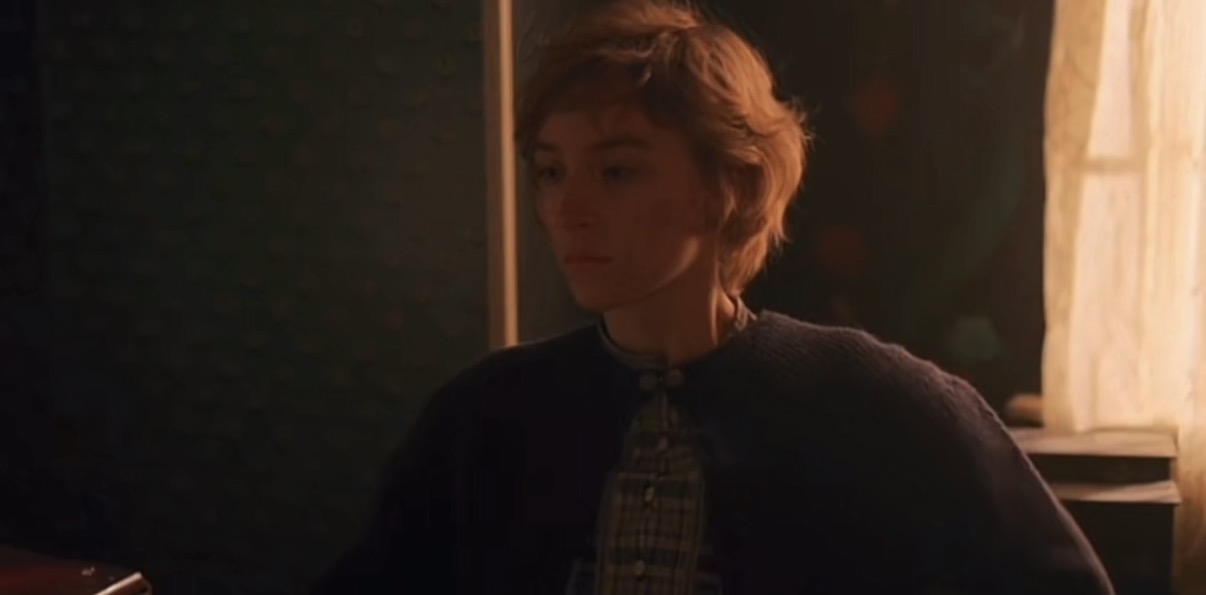
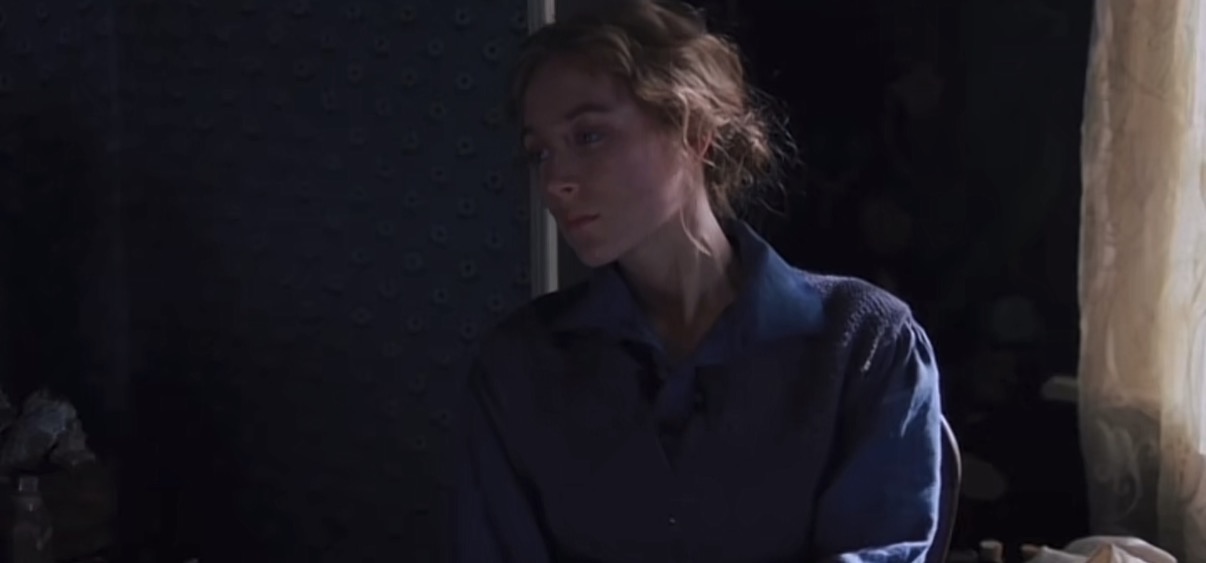
When analyzing colour grading in a film it is important to identify some of the most important moments of the film to understand the way colour acts as a literary tool within the film. For Little Women the most defining moment in Jo’s life is when her sister Beth falls ill and ultimately passes away from her sickness. Beth being on the verge of dying is what brings Jo back to Concord after fleeing to New York to become a writer. Her death acts as a catalyst for Jo writing about her family and getting her first ever novel published, since it was Beth who encouraged Jo to write a more personal story after her death (Little Women, 1:20:13-1:20:43). This in result, makes the scenes of Jo believing for a moment her sister has passed before going downstairs to see she is actually feeling like she is recovering, and Jo waking up to feeling that her sister is gone before going downstairs to realize her instincts are correct, so important to not only the story but the way colour is used in them. In the first scene that occurs at the 1:27:59 mark, Jo is seen waking up to her sister's empty bed and panicking (Fig.3). This scene takes place in the early morning, which explains the sunlight coming through the window that is covering Jo as she wakes. The light in this scene highlights Jo’s golden hair, the warm toned green of the walls and the glow of her skin. The following stills are using the same colour grading to show the comforting warmth that childhood memory brings Jo and her family, as it reminds them of a time they were hopeful for their loved one who was surviving against all odds. After reuniting with her sister in this scene, the scene that follows is of the entire March family, and the Laurence’s celebrating Christmas together with their father making an appearance for the first time in the entire film, since he has been away aiding soldiers fighting in the war. This scene further reflects how impactful this memory is for Jo since she was finally getting her family back together. The contrasting scenes that begin just 3 minutes later–beginning at 1:29:35–is Jo once again waking up to Beth no longer in bed years after the first time, but this time there is an unnerving feeling in the scene that gives the impression Beth is gone (Fig.4). This is felt because there is no sunny light coming from the window behind Jo, the stark light makes Jo appear extremely pale and accentuates the harsh lines on her face that were once softened by her hair and clothing. The wallpaper has even shifted to appear more blue, creating a melancholic feeling to the home. Parallel to the Christmas scene, what follows is a shot of Beth's funeral, and not all members of Jo’s family are present, notably Amy and Laurie. Along with the colour grading, Gerwig filmed these two scenes extremely differently despite them appearing very similar. In the childhood scene there are quick sequences of Jo running down the stairs quickly to see where her sister is, but in the adulthood Jo is moving rather slow and the camera holds a still image of her slowly descending the stairs. All of these aspects help to create the feeling of loss and the permanence of death, meaning that this pillar of Jo’s childhood has officially been lost forever and she is being forced to let go. These scenes are detrimental to understanding what Gerwig is compelling the audience to feel throughout the story with the techniques she is utilizing, they act “as tentpoles in the overall design of the project” (Haine, 45) that explain the visual elements of the rest of the film.
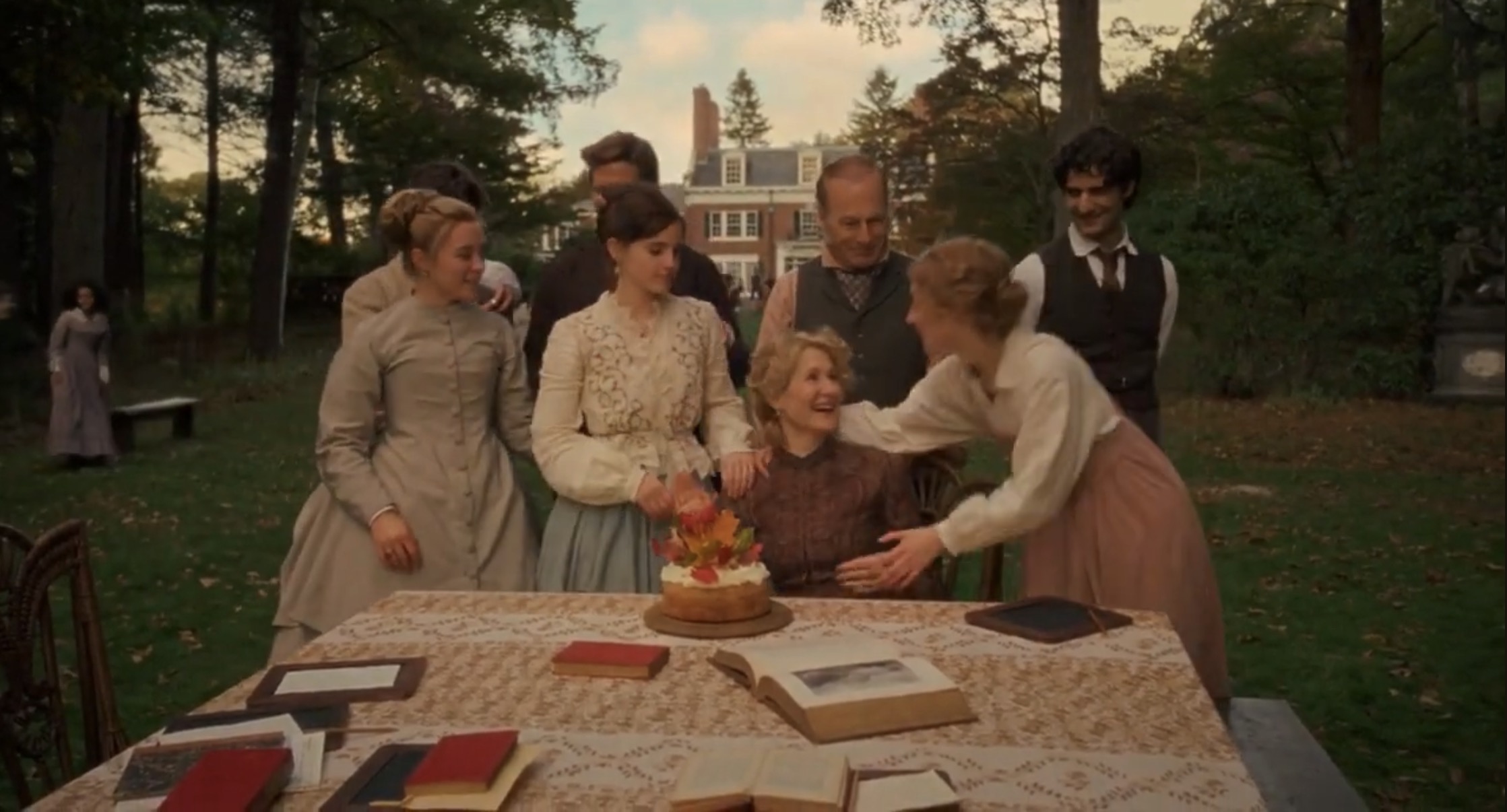
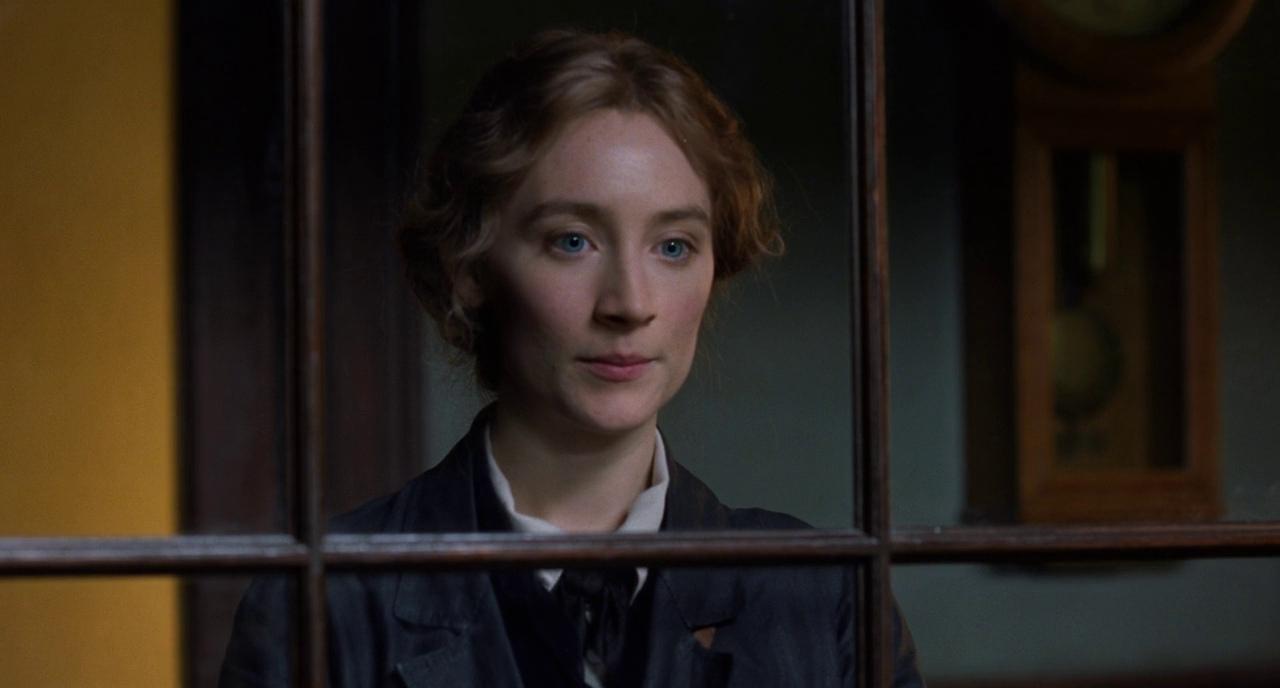
Considering all of this, why is it that Greta Gerwig's interpretation of nostalgia being presented through colour grading is so effective with audiences? A large part of this is because of symbolic interactionism. The film illuminates the idea that “all social reality [...] is entirely constructed, based on shared ascribed meanings placed on symbols, objects, people, and places.” (Asimakopoulos, 51). As a society, we unknowingly place certain values onto different imagery that, as a collective, reminds us to feel a specific feeling. In the instance of Little Women that feeling is nostalgia. There are aspects of the colour grading for this film that symbolize warmth, a cozy, comforting atmosphere for everyone watching. Especially living in a time where films and other media are being stripped of their identity because of a desire to not overwhelm audiences with bright colours. In the book Chromophobia, David Batchelor discusses how “in the West, since Antiquity, colour has been systematically marginalized, reviled, diminished and degraded.” (Batchelor, 21), which is an issue more and more people are starting to have with film and television. There was once a time of uproar because people did not want traditionally black and white movies to be colourized in fear that it would ruin the way the film was originally intended to be perceived (James, 15). Now, people are longing for colour to be put back in film because ultimately it helps the film's story move along, and it can gravitate audiences to the film. Gerwig understands the importance of this issue as she continuously fills the films she directs with exuberant colouring. She understands that to make the long-loved story of Little Women her own, she had to tear it apart and piece it back together again, thus she created the non-linear timeline that “foregrounds how one’s interpretation of the very same music, words, and images is inflected by context.” (Ue, 58-59). Gerwig is able to wrap up the story of the March sisters without any dialogue in the sequence of the final scenes because she has built up the story through colour throughout the entire 2 hour run of the film. The final scenes of the film are alternating between Jo walking through the yard that her school is on, slowly adding members of the family to her walk before reaching her destination of Marmee waiting for her birthday cake (Fig.5), and Jo watching the production of her first book being created (Fig. 6). These scenes do not rely on a narrative voice because the signifiers speak for themselves to tell the ending. The scene of Jo walking elicits similar feelings of comfort as the childhood timelines, but the audience knows this is the finale of the film, and Jo is no longer a child. This is the first adulthood scene that is coloured in this signature golden hue because Jo is at peace being with her family again. Furthermore, in Fig.6 Jo is seen watching her book get made, and there is a mix of the two colours we have learned to identify throughout the film. There are still many cool tones in the walls, Jo’s hair, her eyes, but there are also features that represent the peace that is coming, such as the brown wood of the clock, the yellow wall, and the rosiness of her cheeks. This signifies that Jo does not feel she has to differentiate her childhood memories from her adult life so harshly because she is beginning to feel the happiness and purity she felt in her childhood again. It's this sequence of stills that strongly exemplifies that “colour speaks silently for itself in art” (Batchelor, 98), and that Gerwig has mastered letting it do so.
In conclusion, Greta Gerwig was successful in interpreting a story that is so widely appreciated–and has been so for over a century– in a new format that helps her adaptation stand out from the rest. Gerwig presents a thoughtful film that rejects simple storytelling by going against a traditional way of storytelling to deepen the impact of the characters journeys through growing up, grieving a loved one, and longing for a different time in life by tactfully using colour grading to further these notions. The two separate colour palettes of the film allow audiences to feel the warmth that surrounded the March sisters in their childhood home as they spent their years loving each other beyond anything, and the despair that follows the loss of childhood that can strangle the comforts of life. This technique invites the audience to understand the March sisters, more specifically Jo, as she battles with the death of her sister Beth and the emotional strain between herself and her other sisters. Gerwig weaves the classic storyline with the visual storytelling to create a film that will go down as a classic example of why colour grading is extremely important in film making.
*Images in this online publication are either in the public domain or are being used under fair dealing for the purpose of research and are provided solely for the purposes of research, private study, or education.
Work Cited
Asimakopoulos, John. “Postmodernism: The Evolution of Symbolic Interactionism and Critical Theory.” Theory in Action [Fair Lawn, United States], with Erving (1922-1982) Goffman, vol. 15, no. 3, July 2022, pp. 50–71. ProQuest, https://doi.org/10.3798/tia.1937-0237.2217.
Batchelor, David. Chromophobia. Reaktion, 2000.
Boym, Svetlana. The Future of Nostalgia. Basic Books, 2001.
Dorrian, Ryan. “Millennial Disentitlement: Greta Gerwig’s Post-Recession Hipster Stardom.” Celebrity Studies, vol. 13, no. 3, July 2022, pp. 326–43. DOI.org (Crossref), https://doi.org/10.1080/19392397.2020.1848601.
Gerwig, Greta. Little Women. Columbia Pictures, 2019.
Haine, Charles. Color Grading 101 : Getting Started Color Grading for Editors, Cinematographers, Directors, and... Aspiring Colorists. 1st ed., ROUTLEDGE, 2019.
James, Caryn. “Critic’s Notebook; Fighting Against Film Coloring With a Label as a Weapon.” New York Times, Late Edition (East Coast) [New York, N.Y., United States], with James H. Billington et al., 6 Nov. 1990, p. C.15. C.
Ninčetović, Nataša. “REBRANDING LOUISA MAY ALCOTT FOR MODERN TIMES: THE FILM ADAPTATIONS OF LITTLE WOMEN.” Folia Linguistica et Litteraria, Jan. 2026, p. 7. DOI.org (Crossref), https://doi.org/10.31902/fll.53.2026.1.
Saberi, Elahe. “The Impact of Non-Linear Narrative Structures on Better Character Development in Animated-Short Movies.” AVANCA | CINEMA, https://doi.org/10.37390/avancacinema.2023.a505.
Ue, Tom. “Once More, with Feeling: The Sonata Pathétique in Louisa May Alcott’s and Greta Gerwig’s Little Women.” ANQ: A Quarterly Journal of Short Articles, Notes and Reviews, vol. 36, no. 1, Jan. 2023, pp. 58–62. DOI.org (Crossref), https://doi.org/10.1080/0895769X.2020.1835453.
Warner, Helen. “‘An Indie Voice for a Generation of Women’?: Greta Gerwig, and Female Authorship Post #Metoo.” Feminist Media Studies, vol. 24, no. 2, Feb. 2024, pp. 292–306. DOI.org (Crossref), https://doi.org/10.1080/14680777.2023.2196605.