Cinnamon in a Late Summer Evening
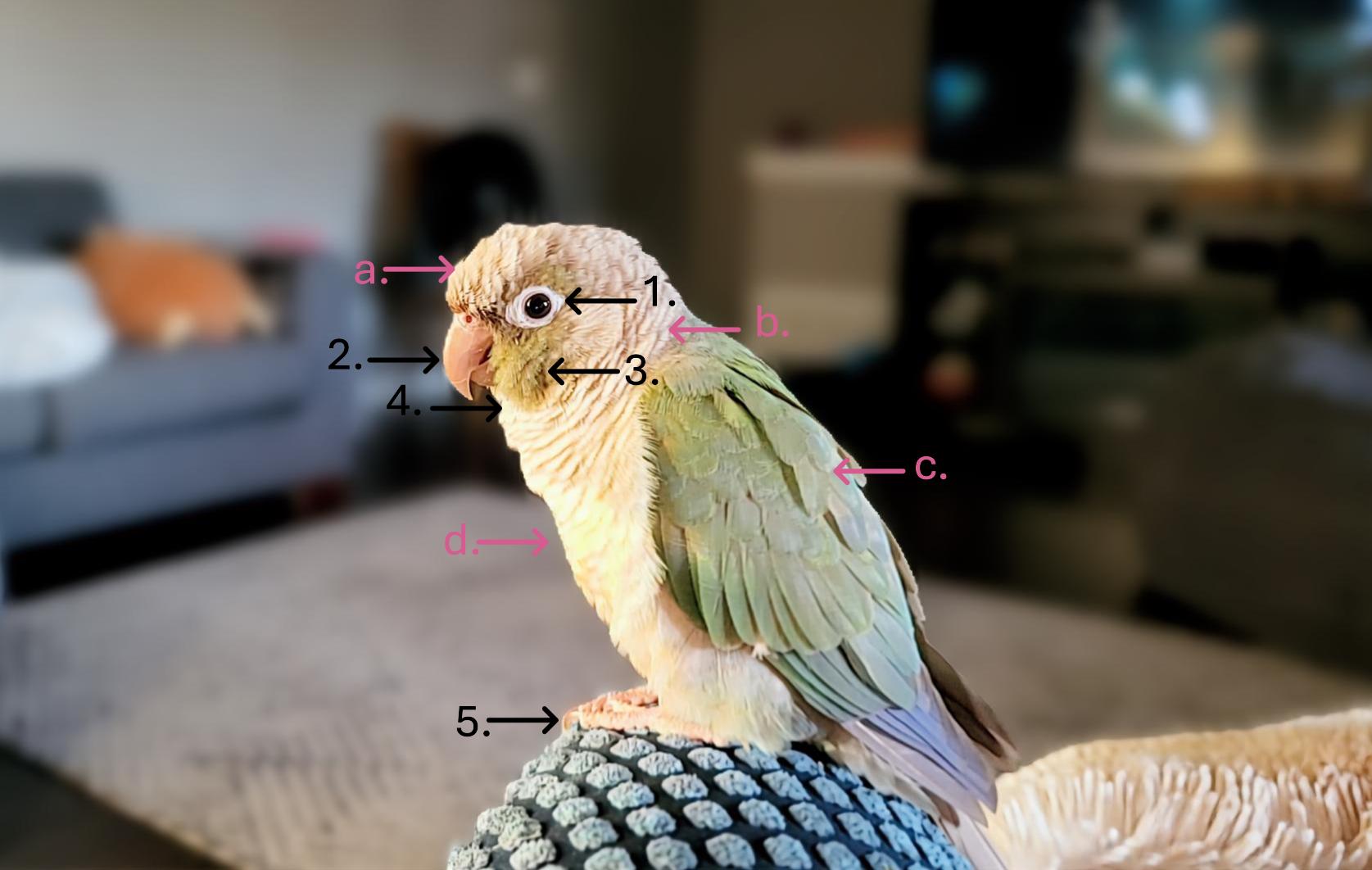
1 media/Cinnamon Labelled_thumb.JPG 2026-02-08T00:30:42+00:00 Leah Cassidy 5ad486626b027b033a45db00d43f52c6a50eed53 28 1 Cassidy, Leah. Cinnamon in a Late Summer Evening. 08 July, 2024. Author’s personal collection. A labelled picture of Cinnamon the conure. plain 2026-02-08T00:30:42+00:00 0,0 Leah Cassidy 5ad486626b027b033a45db00d43f52c6a50eed53This page is referenced by:
-
1
2026-02-08T00:55:10+00:00
How to Look at a Conure
1
plain
2026-02-08T00:55:10+00:00
Among the fluffy, furry, and feathered companions of the pet kingdom, the conure reigns dominant within its subfamily of New World parrots as the loudest - in colour, in sound, and in personality. Although the trait of loudness may indicate that you could simply glance at a conure and everything that they are would hit you straight in the face, no deeper looking required, that would simply be an error on your part. The conure’s personality and observing it (eventually coming to know it) begins with looking at each individual section of the conure to realize their contributions to the personality that well exceeds the size of their body.
Observing the conure is two-fold. As with looking at most beings that stare back at you, we look into their eyes. Conures eyes are on both sides of their heads and you will often find that they will stare you down with only one of them as the pictured one below is doing. The white wrinkled skin around the conure’s eye is called the orbital ring, and it does warrant a closer look as it tells the observer the age and health of the bird whose eye it surrounds. Indeed, the conure and its all-seeing eye is constantly calculating the worthiness of who its gaze is centered on. For it is the eye that then determines the action of the beak - made up of the same material that composes human fingernails - that can either bring about a painful chomp or open up to softly yawn. There is much to know in looking at the conure’s beak; however, the different feathers highlighted in pink lettering are part of the second layer of looking at the conure. They are the indicators to pay attention to if you want to predict just exactly how the conure will utilize their multi-purpose pecker. Before we get into that second, more involved layer of looking we must note a patch of fluffy green cheek, throat feathers that hide the Syrinx (better known as the screeching scream-box), and the feet composed of the scales - the existing reminder that their ancestors were dinosaurs - that coat the four “fingers” each tipped with a claw. Their feet are another apparatus the conure has many functions for whether it be climbing up and down the people they explore, grasping their seeds or treats like a little hand, or scritching their head, beak, and little nose-holes.
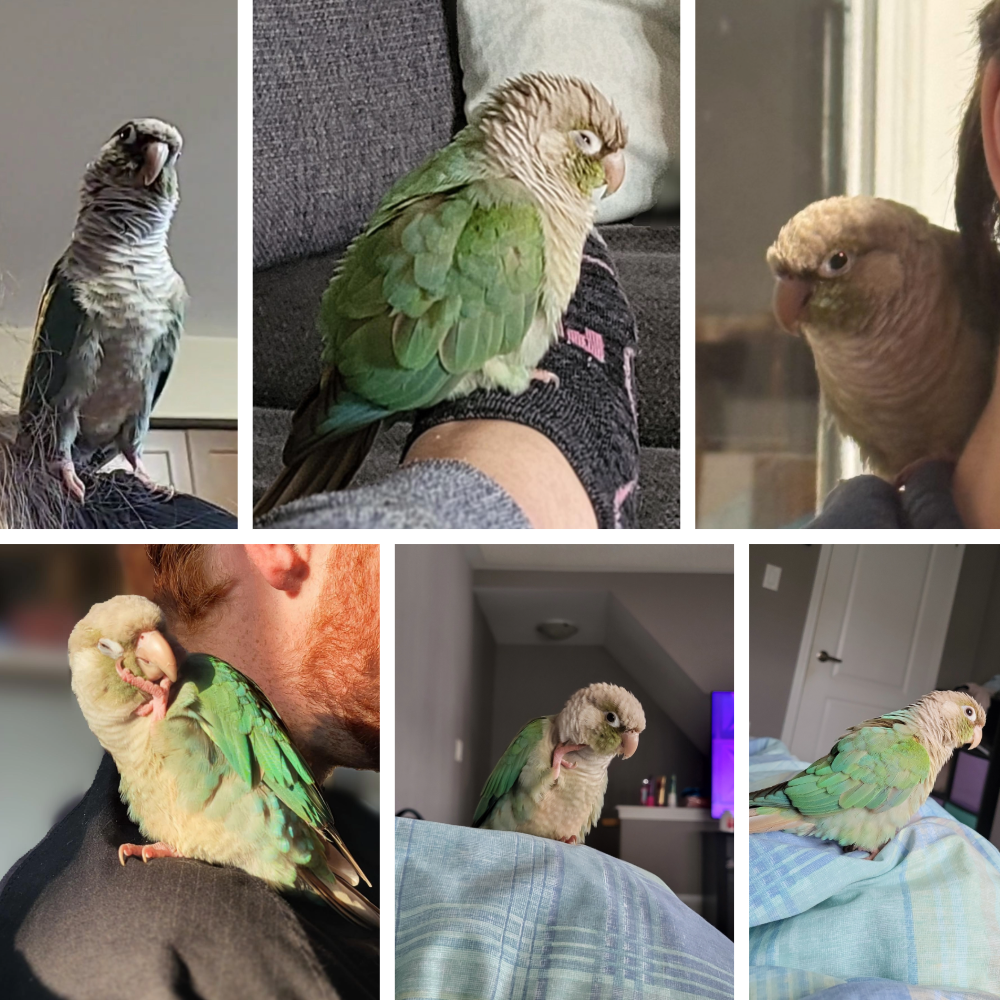
So far, we have just zoomed in a little bit with our eyes but looking at a conure requires active interpretation, with close inspection being our lens through which to do so. It is true that the conure is an adorable ball of puff, but that puffiness can be deceptive! Take a look all at once at the different feather groups highlighted by pink arrows. All of those feathers work in harmony to form many different states of puff and most of the conure’s personality is revealed through their puffing. The four states of puff are: happy puff, sleeping puff, angry puff and possessive puff. If there is absolutely no puff and all of the conure's feathers are lying flat, they will appear skinny, and a skinny conure is a scared conure. Puff interpretation comes from noting what part each of the conure’s apparati numbered in black are playing in the conure’s puff. If the conure’s puff has transcended to absolute ball form, they are standing on one foot, and their eyes are closed, the conure is contentedly sleeping. If the conure’s neck has elongated and puffed at the cheeks with their little feet stretching them up, they are curious beyond delight at whatever they are witnessing. Some of the described conure poses are included for some visual representation of the different personality puffs; there are also some undescribed poses included - use the active looking measures you have learned and see if you can understand what the physical characteristics and puff are showing you! Conures are wonderfully loving creatures who expect the highest form of observation and interpretation from their human companions for, after all, they are the ones constantly, consciously, and colorfully showing you their whole personality, so a little interpretive observation isn’t too much to ask from you now, is it?