Spinning Top
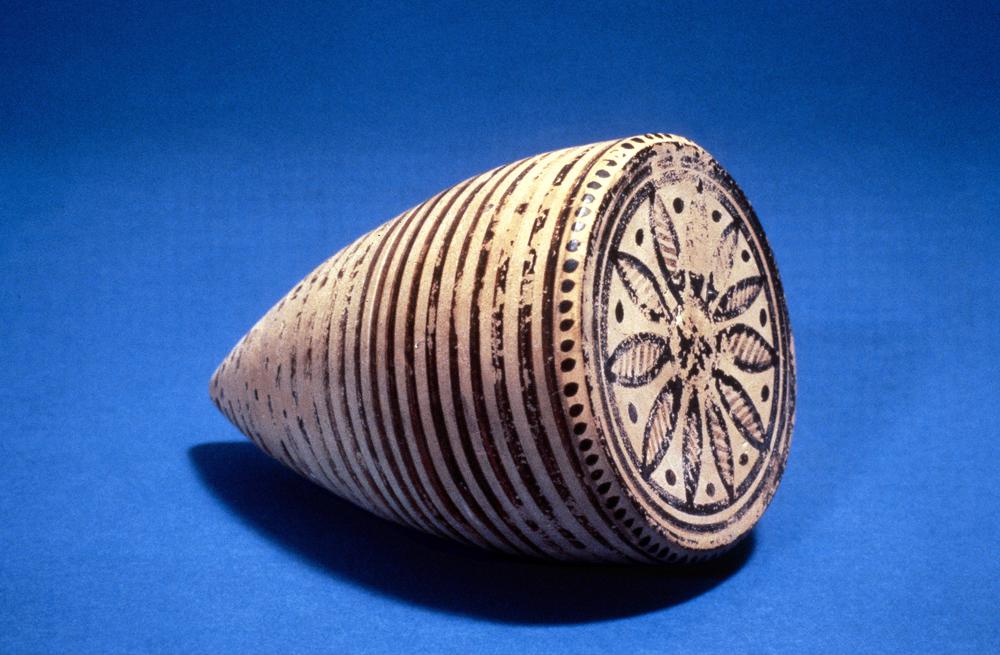
1 media/spinning top_thumb.jpeg 2026-04-19T08:48:29+00:00 Ubah Nur 34661e3b93f2844ef9834dff03071f46b71e391f 92 2 Figure.1 Spinning-top; votive offering, 8th Century B.C Athens. British Museum. plain 2026-04-21T00:36:49+00:00 1875 0309 31 Ubah Nur 34661e3b93f2844ef9834dff03071f46b71e391fThis page is referenced by:
-
1
media/red aura.jpeg
2026-04-19T08:12:02+00:00
The Spinning Top: The Bridge Between the Old World and The New World
70
plain
2026-04-27T22:10:14+00:00
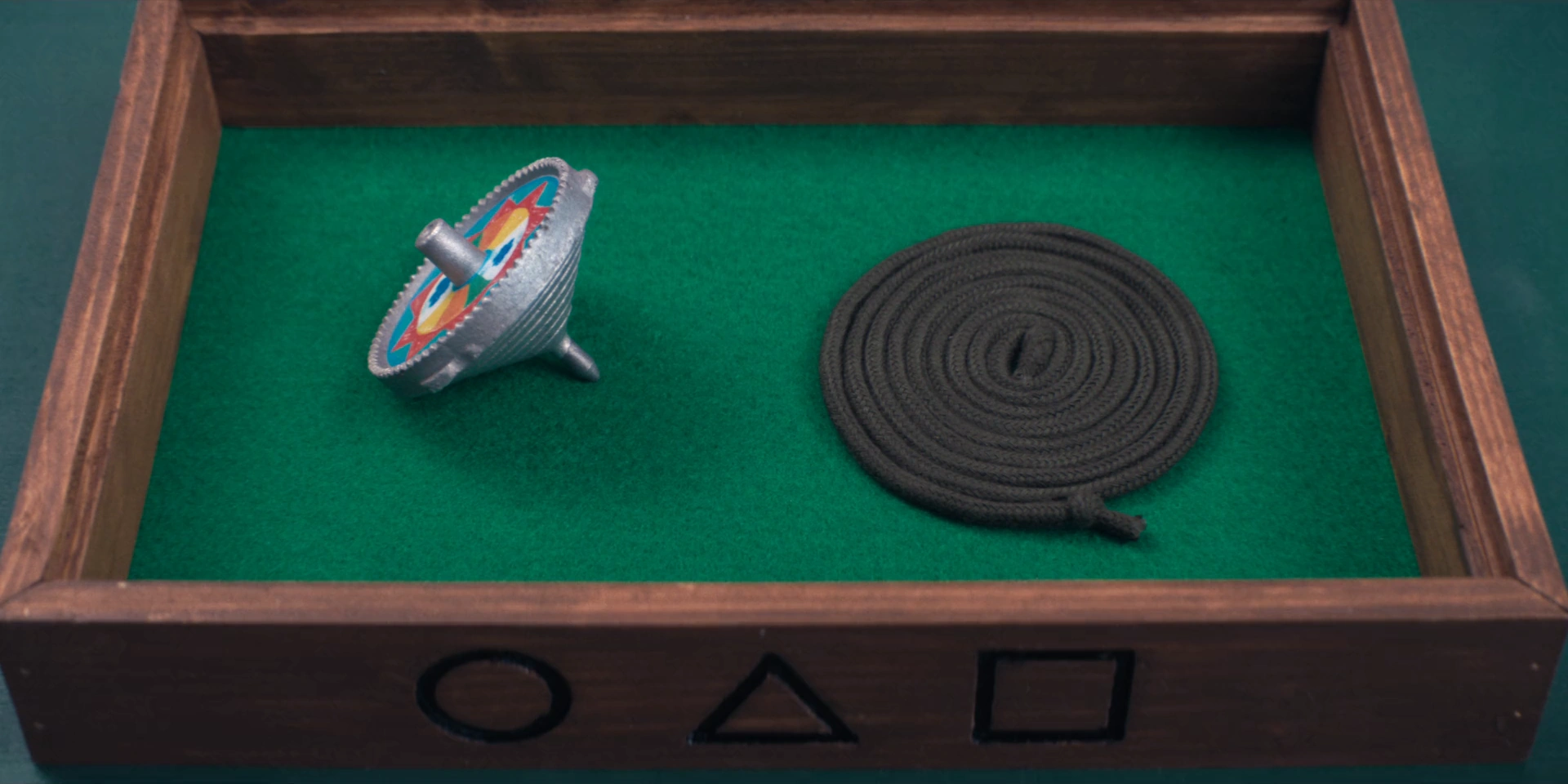
Whats old, always finds a way of becoming new.The spinning top, a simple toy in appearance with its structures and motions rooted in physics, has a long lasting history dating back to ancient Egypt and Mesopotamia (modern day Iraq) around 3500 BC. Although, historians have not been able to pinpoint the first interaction or known made spinning top; it has been seen as existing around various cultures around the world. David Featonby highlights the structures in which this toy exists from early childhood: “Tops are mentioned in classical literature and references are even found in the ancient world. For many children a top is one of the first mechanical toys that they play with by themselves.”(409). Highlighting both its historical presence, and its role in play from early childhood. For childhood the toy has been reconstructed to suit new generations for battling each other such as Beyblade, a challenging competitive game with its significant phrase “let it rip!.” The spinning top is also seen used in the film Inception directed by Christopher Nolan, used as a totem by the main character Cobb in order to ground himself and distinguish his dream state vs his reality. TV Shows like Squid Game use the Paengi-Chigi known as the spinning top during one of their challenges, where players use a cotton string to wind it and the only way they move on is if it maintains its balance while spinning. In religious contexts, Jewish People use a Dreidel (spinning top) played during Hanukkah “The Festival Of Lights” that occurs every December during the holiday season.
Furthermore, the spinning top historically resonates with the Ancient Romans where their children would play with these toys that were made from materials like clay or wood. Even referenced in literary works like The Aeneid By Roman Poet Virgil, comparing Queen Amata's reckless and rage filled behavior to how a spinning top moves erratically with that of a lack of control.This toy has been relevant within different time periods, which poses the question how does this toy bridge, and link human experiences across multiple generations? Its roots span into ancient civilizations ,film, into the realm of popular culture and a world beyond; being used for things like rituals, divination and gambling. How has it been able to maintain its cultural relevance, and withstand the test of time, or does it boil down to merely a chance of fate?
This Exhibit will be conducting a timeline of research from the spinning tops historical era, religious contexts, the literary works that reference the top and how it is still used in popular culture today. The different areas and languages that interact with the top, the importance in which the top has been made into a capitalist monopoly, and how it has transformed beyond its original usage.Spinning Tops Historical Relevance (900-700 B.C)
Spinning Tops in the modern era usually consists of colourful shading, and vibrant aesthetics to highlight the time period in which it exists. Much different than the intricate detailing and hand painted wooden designs that are seen existing in museums such as the British Museum where these pieces come from ancient periods. Shown in figure one this spinning top "terracotta whip-top” originating from Athens during the geometric period, is said to be a tomb offering (British Museum). This is also the time period where ancient Roman poet Homer would use it in one of his famous poems, which will further be discussed. Significantly, also found in Egyptian King Tuts tomb, these decorated wooden tops were there to highlight traditions of the people.Placed within graves as a form of ritual, many were recovered and eventually found their way into museums from collectors of antiquities. Acquired in 1874, existing in geometric Athens, the toy was commonly made up of various different materials like glass, stone and with wood being the most relevant sourcing used (Lambrugo 74).Spinning Top In Different Cultures and Languages
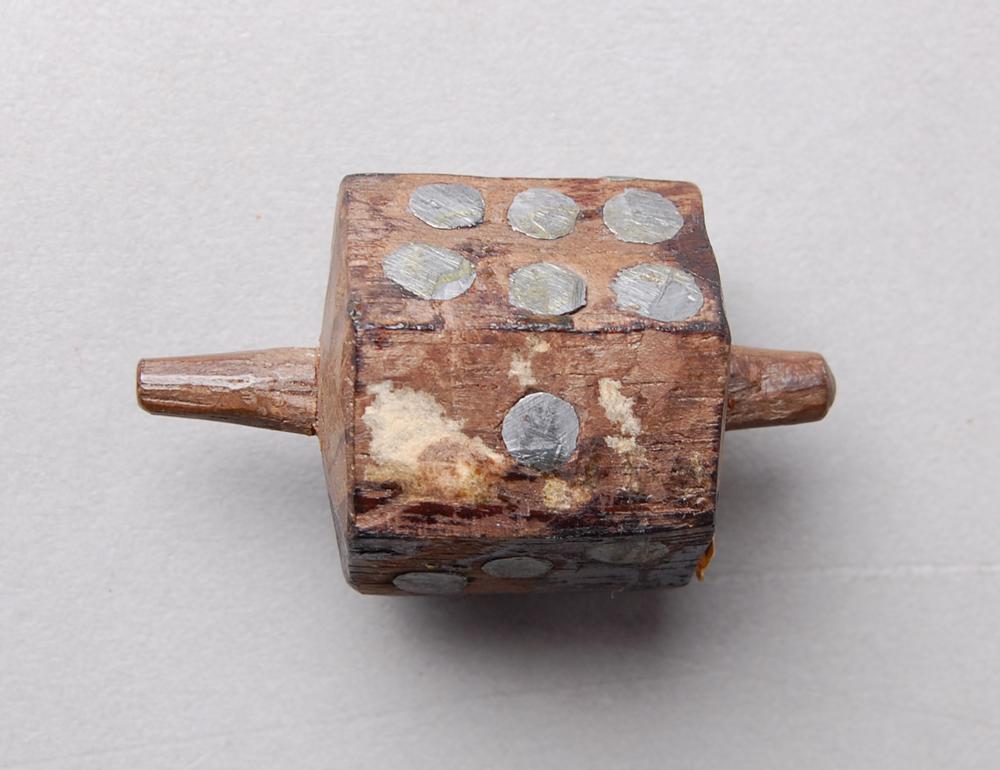
Historians believe that tops exist in almost every culture, hailing from places like Asia, Africa and Europe some form of the spinning tops are found in almost every culture around the world, it is hard to find a country that does have a name for a spinning top (Featonby 1). In Malawi the spinning top is called Nguli, In the Philippines or Latin America they call it Trompo, In Korea it is called Paengi noted in the popular Korean tv show Squid Game. Going back to the Greeks and Romans, they referred to this four sided spinning top as teetotum. Mainly used as a substitute for dice, in order to gamble, players would use them in chance games of put and take. The top would be marked with different lettering on each side, where the players would then take turns spinning them and each side would have a letter signifying whether to put pieces into the pot, take some from the pot, or take all (totum) deriving from the latin word meaning "the whole." Comparing both figure 1 and figure 2, figure 1 has ancient drawings on it used for rituals and ceremonies celebrating tradition, figure 2 has lead engravings in it with different sides displaying different numbers; consistent with its use for gambling games.
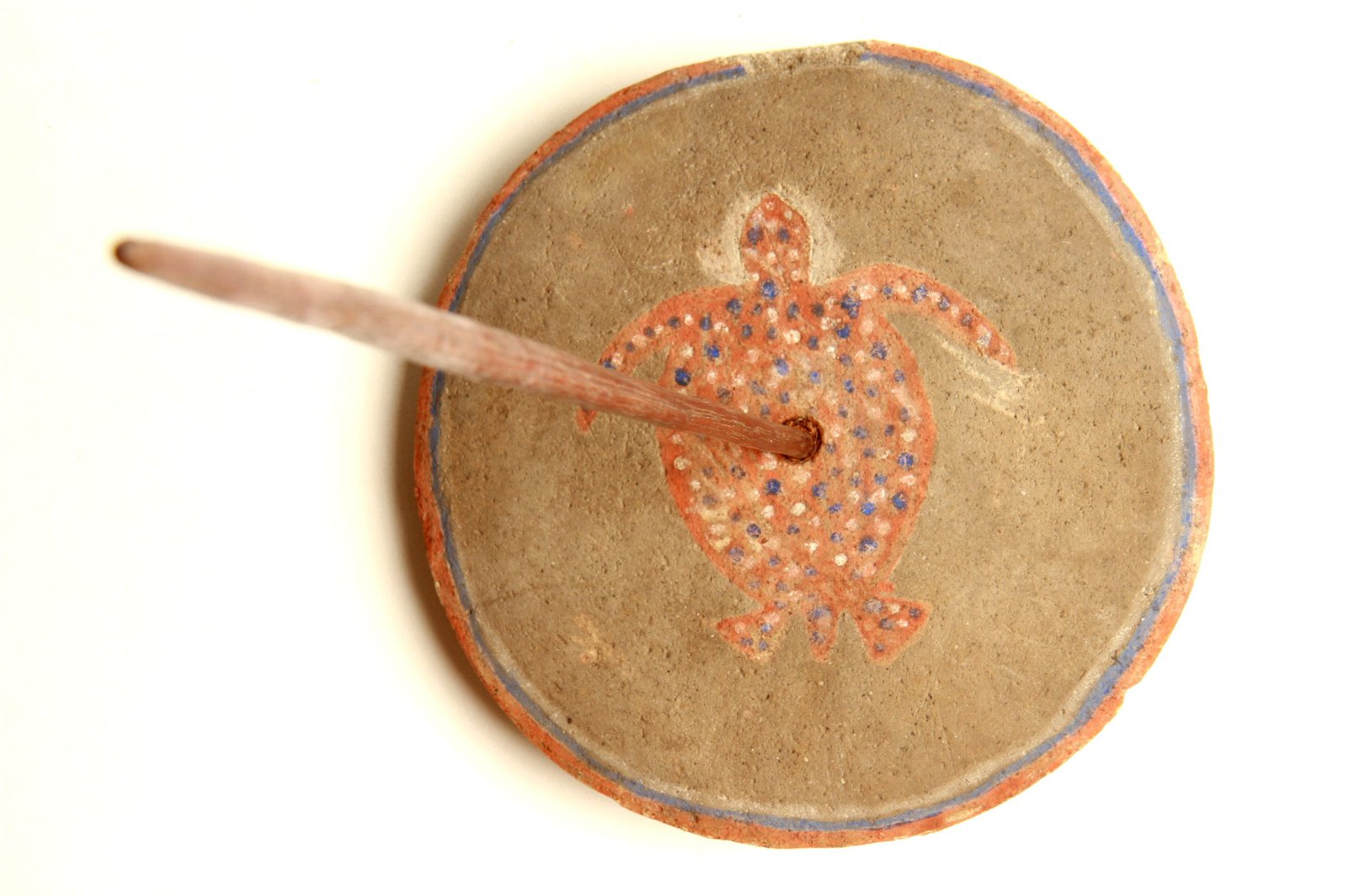
Indigenous Spinning TopsSpinning tops are also seen used as a means of entertainment within indigenous tribes, notably Australian ones. Made from materials like beeswax, a stick is placed in the middle of the top which is made from hardwood. Types of gourd which is a hard-shelled fruit are also used for spinning tops in regions where the fruits are plenty; and this is how they are able to use items found in their communities in order to entertain each other. The top is spun using both hands from the player, and whoever’s top spins the longest comes out victorious. First nations tribes use resources found locally to make up these tops, which are found throughout Australia. In figure 3, this one specifically is from Cape York, where many of the region is Aboriginal. In the Australian museum that highlights artefacts, these tops have been collected from a protector of first nations and where you can find six of them residing there (Australian Museum). Figure 3 is different from figure 1 and 2, due to the stick placed in the middle; this can be an easier way to spin the top using external forces such as the friction of your hands.
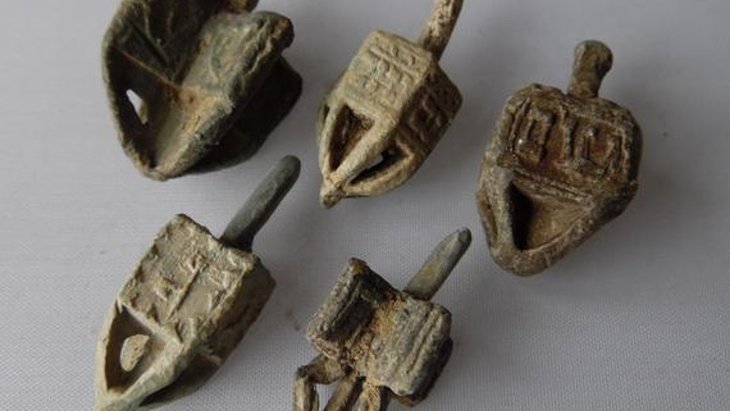
The spinning top or known as the dreidel coming from the the word in Yiddish dreydl (spin) is seen used for jewish holidays, origins dating back to where many historians believe comes from a german game called totum. Highlighting, that maybe German Jewish people were the first to be introduced to the top, which was then later used for the religious Judaism holiday. Developed over the course of history, its roots span across different cultures and civilizations; and has been heavily influenced in the holiday. In a letter to a Rabbi, Solomon Golomb highlights the dreidel actually being an ancient toy: “So the actual item goes back to "the ancient Greeks and Romans", and is thus not of recent origin. How and when the Jewish version originated is not yet clear to me, nor how it got associated with Chanukah ... but it was probably known in ancient Israel during the Hellenistic period, which was also the age of the Hasmoneans ... and the borrowing could have gone in either direction.” (294). Historians believe that the spinning top was spread through the middle east, through the Romans and even into places like England, although how they found their way onto those soils is not explained. The dreidels orgins can also be attributed to the time in which studying the Torah (text of Judaism) was not allowed by the Greeks, in which Jewish people would hide behind these gambling games in order to not bring attention to the studying of their book.
Ever heard of the saying “beyblade, let it rip!” This was a classic saying that cemented itself in every child's vocabulary that was born in the 90s and early 2000s. Many of these children were introduced to beyblade, released in Japan in 1999, this spinning top game later made its way into the American market. Takara Tomy developed an advanced and modern take on the classic spinning top which later also developed into a Tv anime series. The toy was made with a wide range of colors, materials and styles, that was constructed in order to catch the attention of the kids who grew up on these colour palettes. The spinning tops originally made up of items like clay or wood, have instead been monetized entering the realm of popular culture in order to fuel a child's need for competition:“They are being heavily promoted in this country for children from the age of five upwards. Basically they are spinning tops ‘that battle’ and they battle within something called a Beystadium.” (Smidt 77). Kids would bring these beyblades to school, and battle each other on the courtyard during recess. Or run home after school in order to catch an episode of the Anime series that focuses on teams competing in these battles. In the article titled “New Children, Different Toys” Lauwaert Maaike discusses the shift where children's toys went from simple pleasures to a common place item: “What has changed since the mid-19th century is, on the one hand, the way toys are produced and consumed, the scale and variety of this production and con-sumption, and, on the other hand, the way in which society looks upon children and the function of toys in their lives.” (22). How the spinning top transformed into an item for capitalist gain, exists within the frameworks that children's toys have developed into this monopoly of competition; similarly to how the beyblade is played. Sandra Smidt, highlights how capitalism puts pressure on parents due to its intense advertising and changing fashions of children; where these common toys are flipped into an expensive ploy that they are not able to afford (77).
Totem: The spinning tops usage in the film “Inception”The spinning top in the film Inception which came out in 2010, is used as both a symbol for grounding and stability. When it's spinning, it's stable and in order, and when it's about to fall down it becomes wobbly and distorted. Much like reality where things are not merely perfect, this toy serves as a bridge between living lucidly in a dream state and reality. Deniz Çelik further discusses in: “The Unconscious as Cinematographic Form: A Psychoanalytic Reading of Inception” the gap between the present and that dream state; with the film utilizing the unconscious as both a cinematic form and its use of devices such as the spinning top (1). Its presence within the film is highlighted during a scene where characters Cobb and Ariadne enter a dream state, and encounter Cobb’s wife who is trapped there merely by decisions made by him and her while living in their dreams. She later commits suicide in her reality, due to not being able to differentiate between the two. Ariadne is distraught after experiencing such events and Cobb suggests to her that she will need a “totem,”something that serves as a reminder, noting that this item acts differently in both worlds. Arthur, another character, references carrying a small object that you can take with you when you enter that dream state, that is unique to you. For Cobb that object is a spinning top, silver in colour, shiny and made up of metal. He is seen constantly interacting with this top, as a means of reminding him where his subconscious lies. Tharyza Tara Kirana reinforces this point by discussing how the symbol of the spinning top conveys inner conflicts, repressed desires and the trials and tribulations that the main character Cobb faces (57). His psyche is in a troubled place, and the spinning top is the only thing grounding him during his struggles between both reality and his dream state.
Inceptions Ending
The use of the spinning top in the ending sequence of Inception, was probably the most profound use of an ancient toy in order to symbolize whether the main character is still dreaming. He wakes up in the plane after doing his inceptive mission, and is able to re-enter the USA if the mission was successful. He is seen going through customs with no hassle, and is later able to reunite with his children. Before he goes off with his kids, he spins the top and it is seen still spinning without letting the viewer know the outcome on whether it stayed up right or fell. The difference between being in reality or still stuck in a dream, he instead chooses his fate and decides not to check the final conclusion to his story. The ending is ambiguous with many choosing to believe that he did end up seeing his children, or others making theories suggesting that his "totem" in the film belonged to his deceased wife; and his was instead his wedding ring where he is seen not wearing at the end of the film.Paengi is a traditional Korean game that features spinning tops where the player winds up the top using a string wrapped around; in order to keep it spinning the longest, or knock over their opponent's top. This game was notably present during a Netflix Original Korean show titled “Squid Game”: “It chronicles 456 debt ridden contestants participation in a series of children’s games for a cash prize, and death if they lose.”(Lok 1).The game was a part of a six-legged pentathlon where contestants were tied together and completed a series of challenges in order to move on. The Paengi (spinning top) was one of the harder ones, which required an intense level of focus, and no room for error. If the individual released the top and it did not spin, they would all as a unit have to go and collect it in order to try again; serving as a time consuming game where peoples lives were at stake. This challenge happens in season two episode four, titled "Six Legs" where two teams are seen competing against each other and only one comes out victorious, while the others group meet their death. Although grim, the ending of the episode highlights their anxiety while they fidget with the spinning tops string trying to wrap it around the toy. The other teams are taking note of whats occurring, and make the realization that the spinning top is going to take longer to complete if they mess up. Trying to wrap this intricate string around the top, aim to make it spin, while your hands are sweating; proves to be harder than it looks.
Literary Works Referencing The Spinning Top
The spinning top is seen used in many literary works from poets like Virgil, Homer and even Shakespeare. The Roman poet Virgil referenced spinning tops in “The Aeneid" in book 7 where he compares Queen Amata to that of a spinning top:
“then, truly, the unhappy queen, goaded by monstrous horrors,
rages madly unrestrainedly through the vast city.
As a spinning-top, sometimes, that boys intent on play thrash
in a circle round an empty courtyard, turns under the whirling lash,
- driven with the whip it moves in curving tracks: and the childish crowd
marvel over it in innocence, gazing at the twirling boxwood:”(378-383).
The spinning top is used as a simile in literary contexts where the tops frazzling and unruly behaviour, is compared to that of someone who acts as the toy. In this case Queen Amata is the one moving madly, displaying behaviours that are tragic. Similarly, ancient Greek poet Homer uses the top to highlight violent behaviour in the “Iliad” during 8th century B.C, translated by Samuel Butler the poet describes a scene of conflict where: “Ajax caught up one of them and struck Hector above the rim of his shield close to his neck; the blow made him spin round like a top and reel in all directions.”(413). The Greek poet's reference to the motion of the spinning top, might be considered one of the oldest references in literature in relation to the ancient toy. Homer is seen discussing it first, then Virgil later on referenced it 700-800 years after him.Shakespeare also references the toy in passing when characters interact with them in their day to day lives. In his time this toy was popular and relevant, for both children and adults alike.
Final Comments
Looking at the history of spinning tops they have existed during the geometric periods, 3500 B.C, introduced to the Jewish religion, Indigenous communities, entering the realm of popular culture through games like beyblade and films like Inception or tv shows like “Squid Game.”This toy has been around since ancient civilizations existed, and still finds it way into different modern takes much different from its roots of clay and wood. The spinning top definitely bridges generations and links of human experience, where kids in Ancient Rome or Greece battle each other with a top made up of common items, children that grew up in the digital era use it through beyblade. Both using it as a means of entertainment, the spinning top has transformed from its humble roots into a national phenomenon. Shaping childhood and adulthood, used for play or gambling, all different age groups have encountered the top in some way shape or form. It has withstood the test of time, and without doubt the next generation will find some way to incorporate it into their era.
Images in this online publication are either in the public domain or are being used under fair dealing for the purpose of research and are provided solely for the purposes of research, private study, or educationWorks CitedÇelik, Deniz, and Tugba Elmaci. “The Unconscious as Cinematographic Form: A Psychoanalytic Reading of Inception.” Rupkatha Journal on Interdisciplinary Studies in Humanities [Kolkata], vol. 16, no. 1, 2024. torontomu.primo.exlibrisgroup.com, https://doi.org/10.21659/rupkatha.v16n1.04g.
Featonby, D. “Spinning Tops Revisited.” Physics Education [Brecon], vol. 54, no. 1, 2019, pp. 15022-. torontomu.primo.exlibrisgroup.com, https://doi.org/10.1088/1361-6552/aaefb7.
Golomb, Solomon. “The Antiquity of the Dreidle.” Word Ways, vol. 44, no. 4, 2011, pp. 294-.
Kirana, Tharyza Tara, and Dwi Indarti. “Dreams, Symbols, and Memory: A Psycho-Semiotic Study of Christopher Nolan’s Inception.” Lingua, vol. 21, no. 1, 2025, pp. 57–70. torontomu.primo.exlibrisgroup.com, https://doi.org/10.34005/lingua.v21i1.4864.
Lambrugo, Claudia. A Turning World: a Multidisciplinary Approach to the Spinning Top and other Toys and Games. University Press, 2023.
Lok, Pat. “Sixty Seconds on . . . Squid Game.” BMJ (Online) [London], vol. 375, 2021, pp. n2640-. torontomu.primo.exlibrisgroup.com, https://doi.org/10.1136/bmj.n2640.
Maaike Lauwaert. “New Children, Different Toys.” The Place of Play, Amsterdam University Press, 2009.
Smidt, Sandra. “Sinister Storytellers, Magic Flutes and Spinning Tops: The Links between Play and ‘popular’ Culture.” Early Years (London, England), vol. 24, no. 1, 2004, pp. 75–85. torontomu.primo.exlibrisgroup.com, https://doi.org/10.1080/0957514032000179070.
Other Sources“Virgil.” Virgil (70 BC–19 BC) - Aeneid: VII, www.poetryintranslation.com/PITBR/Latin/VirgilAeneidVII.php. Accessed 19 Apr. 2026.
“Homer: The Iliad.” Homer (c.750 BC) - The Iliad: Book XIV, www.poetryintranslation.com/PITBR/Greek/Iliad14.php. Accessed 19 Apr. 2026.