Human-Created Memes vs. AI-Generated Memes: A Pop Cultural & Political Lens
Meme culture on social media has been evolving for a very long time, from online jokes to business and marketing strategies, which has led the industry to hit $6.1 billion by 2025 (Pulse Advertising). One of the key trends shaping meme marketing in 2026 is the use of AI-generated memes. Brands are using ChatGPT and DALL-E to create customized memes quickly and jump on trends. The recent rise of AI-generated content has been constantly developing and changing every day. With tools like Grok AI on Twitter, created by Elon Musk in 2023, people are able to generate images quickly and instantly. An important question to ask is why memes matter, and the answer to that is simply that memes bring communities together, share humour, and start cultural conversations. What memes also do is that they can be used as propaganda tools in order to spread false information to huge audiences. With recent trends, AI tools have been generating memes that look like human-created memes. Sometimes it can be easy to tell it's AI, and some other times it can look like it’s your normal day-to-day memes.
In this digital exhibit, the object of study that will be observed is the meme culture, human-created memes, AI-generated memes, and the comparison between human-created memes and AI-generated memes. It’s important to look at it from a creative space, since AI has been affecting artists, where their art has been stolen, and they aren’t given any credit. AI generative art definitely raises questions of whose art this could have been stolen from, and thinking about how it can get more views and cultural engagement. I will specifically look into the internet subsection from Twitter, using Grok AI images, which will provide a better understanding of what AI memes can look like and how the public socially interacts with them. I will also look at memes from a political point of view and a pop cultural perspective, which would allow room for discussion of the intersection between both topics. The research methods that I will be using include visual content analysis, comparative studies method (Human vs. AI), and research-based scholarly sources that will provide a better understanding of the meme culture. What is interesting to note is that with AI being updated every day, it will be difficult to find recent articles on AI-generated memes, so keep in mind that there will be a research gap in that aspect. The theoretical approaches that I will be using include semiotics, a cultural studies approach, and posthumanism. The research question for this paper is, if AI-generated memes are visually indistinguishable from human-created memes, what does that mean for authorship, creativity, or cultural meaning? Although AI-generated memes can replicate the visual intricacy of human-made memes, they raise questions about authorship, cultural engagement, and the history of visual humour, challenging common assumptions about creativity in meme culture.
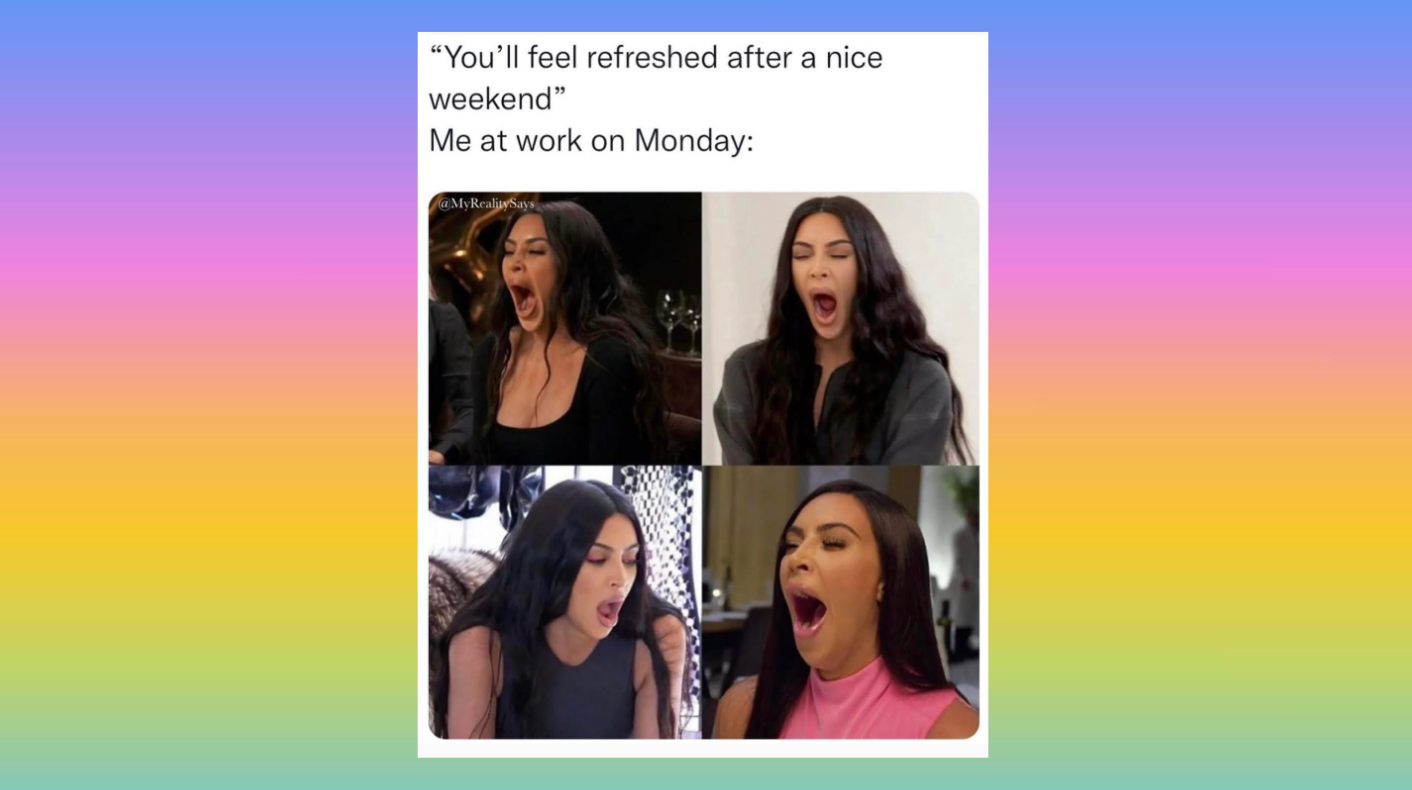
Fig.1 Kim Kardashian meme from the Instagram account @mytherapistsays
Historical Understanding of what Memes are
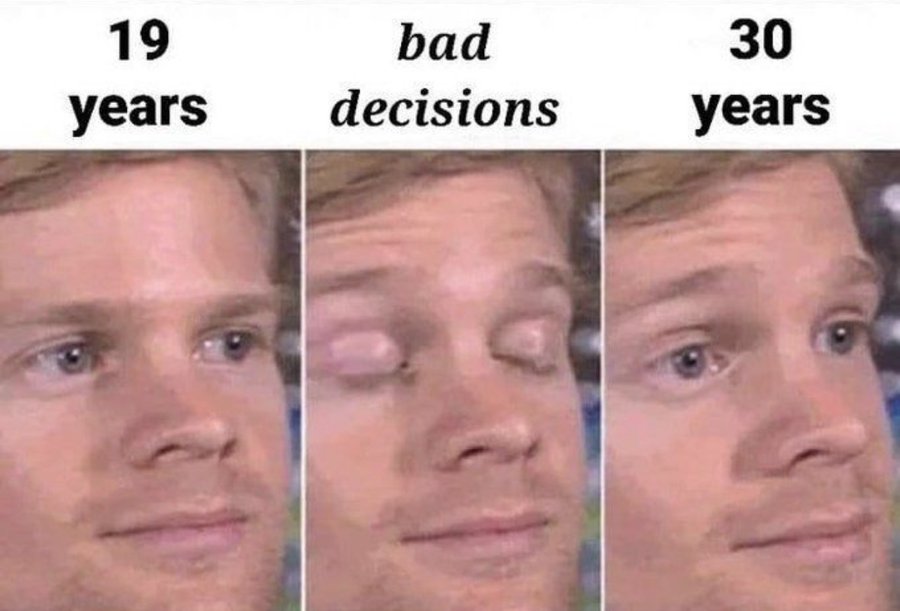
Fig.2 Meme from X (formerly known as Twitter) account @RespectfulMemes
Cultural Engagement
An example of this can be seen in Figure 2, where a meme about life decisions throughout a person’s age is posted on Twitter, and many people are liking, sharing, and commenting under the post, which demonstrates that many people relate and say how they also share the same experiences. What this says is that meme culture allows people to communicate, relate, and laugh with each other on cultural experiences and that “memes are enjoyable, because they resonate on an emotional level and reflect some audiences’ socio-political and cultural realities, even if these recipients will ultimately not share them” (Zündel 5) indicating that its about cultural awareness, the lived experiences and a feeling of connection and community. It’s not just about the technical skills and tools when it comes to creating such memes, but it also brings people together and starts conversations.
What is AI, How Does it Work & What are the Risks?
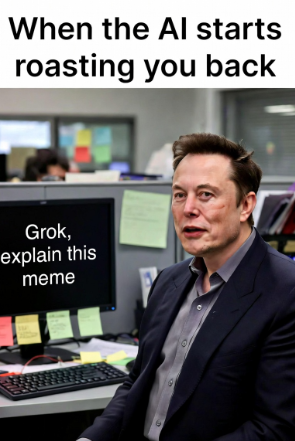
Fig.3 Grok AI meme from Twitter of Elon Musk
Using AI opens the public to risks of data poisoning and cybersecurity issues, as well as model, operational, and legal risks. In terms of harms, one of the biggest is the environmental impact, where huge amounts of water are consumed for cooling data centers, and electronic waste from hardware upgrades. As for ethical considerations, using AI can create bias and societal stereotypes, but also raise considerations in education settings when over-reliance on AI occurs. Some of those include cheating, plagiarism, and not being able to think critically, or losing human interactions, like with peers and teachers. In terms of creative space, AI hugely impacts the arts and takes away the credibility of many artists who have meticulously hand-drawn artwork for years, just to find out that their work has been stolen. Adding on, “while humans need years of training to develop the artistic skills sufficient for creating a genuine artwork and then need hours, days, or longer to create an artwork itself, generative AI, once provided with sufficient data and resources, can learn the skills and create an artwork in much less time” (Malecki et al. 5411) suggesting that using AI tools to create artwork is more time efficient yet the results are not original. All this to say is that while AI can create new information and help people very quickly, it’s important to be aware that generative AI won’t always be fully accurate and can cause more harm than good, and in the end, it comes back to the idea that if AI can replicate form, it still lacks cultural engagement.
Visual Comparison
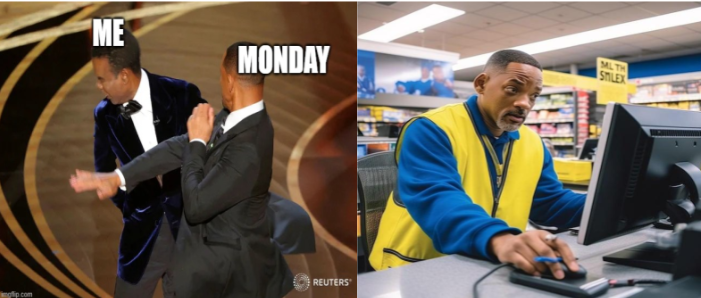
Fig.4 Left side: Human-created meme from the Imgflip website of Will Smith slapping Chris Rock, demonstrating a Monday meme. Right side: AI-generated image of the celebrity Will Smith if he weren’t famous and is working at Best Buy, posted on the Know Your Meme website
If we are comparing it with the generative AI meme, it depicts a very realistic image of Will Smith looking concerned at a computer screen in Best Buy. In this meme, the texture and quality of the image can be seen more smoothly, but also brighter in terms of lighting and color. Even though the generative AI meme of Will Smith looks like it has more AI aspects, such as smoother and brighter features, it is still depicted as a realistic image of Will Smith. Something to keep in mind is that “ memes are nuanced, subtle, and interpretive; AI-images, on the other hand, are an exact representation of a user-generated text prompt” (Petruk 102), indicating that someone who creates a racist, violent, or hateful AI image has to make sure they produce a precise and thorough text prompt to reach the outcome. Human-created memes and generative AI memes can almost look identical, and so, in that understanding, it comes back to the claim about visual indistinguishability, where it comes to a point that AI memes can be hard to tell apart from human-created memes. Additionally, visual similarity can’t always guarantee the same meaning.
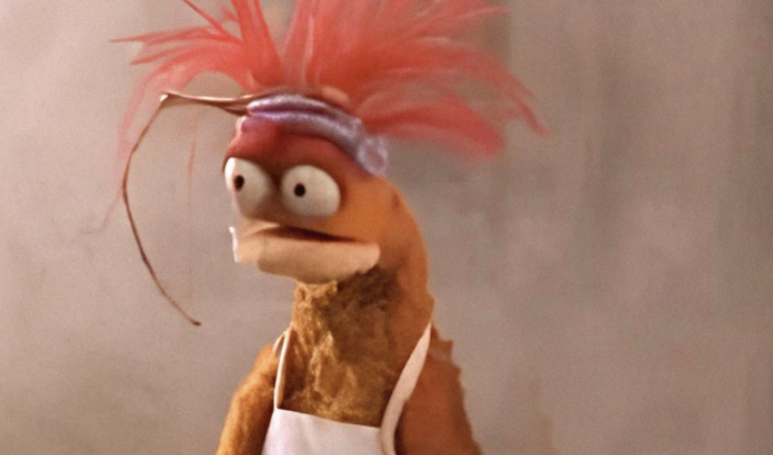
Fig.5 Pepe the King Prawn meme posted on 24 Memes That Kept Us Laughing Through 2024
Human Humour in Memes
AI Humour in Memes
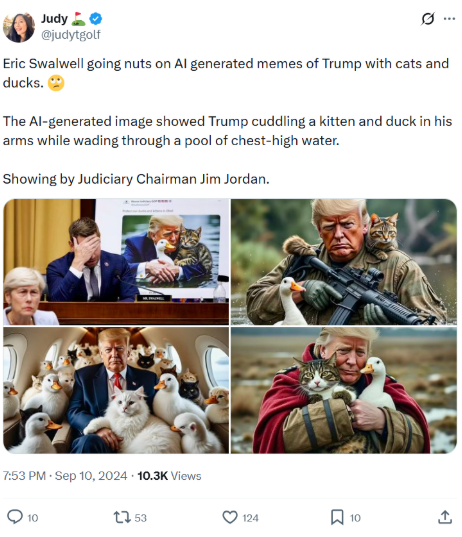
Fig.6 AI-generated memes of Trump with cats and ducks

Fig.7 Meme template examples
Human Authorship
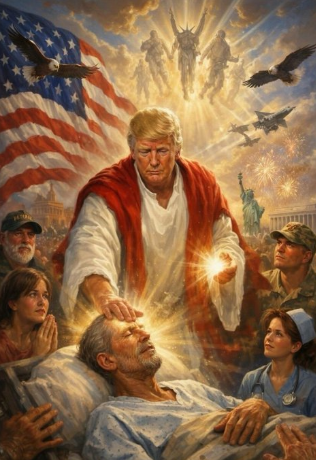
Fig.8 AI-generated meme of Donald Trump posted on Twitter @TrumpTruthOnX
AI Authorship
This one post on Twitter has gained 4.2k likes, 1.3k reposts, 1.1k saved, and 3.3k comments. In the comment section, multiple people have taken this image, used AI again, and edited it in different versions, and some have even made them mock Trump in a way. One of the first replies was someone posting an AI image of Jesus stepping on Donald Trump’s head. In another comment, someone posted an AI image of the devil healing Trump. These interactions include the human connection through humour; however, it still disrupts traditional ideas of authorship, since people are using AI to edit the meme.
What about Creativity?
Final Thoughts
Images in this online publication are either in the public domain or are being used under fair dealing for the purpose of research and are provided solely for the purposes of research, private study, or education.
Works Cited
Malecki, W. P., et al. “The Impact of Exposure to Generative AI Art on Aesthetic Appreciation, Perceptions of AI Mind, and Evaluations of AI and of Art Careers.” New Media & Society, vol. 27, no. 9, Sept. 2025, pp. 5410–32. DOI.org (Crossref), https://doi.org/10.1177/14614448251344590.
Petruk, Alex. “Memes vs. Machines: Comparison of AI-Generated Images vs. Traditional Memes in Right-Wing Social Media Discourse.” Crossings: An Undergraduate Arts Journal, vol. 5, no. 1, Sept. 2025, pp. 99–114. crossingsjournal.ca, https://doi.org/10.29173/crossings324.
Ungureanu, Daniel. “Overload Opacity: Countervisuality and Glitch Aesthetics in AI-Generated Brainrot on Instagram.” Discourse, Context & Media, vol. 69, Feb. 2026, p. 100972. ScienceDirect, https://doi.org/10.1016/j.dcm.2025.100972.
Zündel, Jana. “Undetectable Participation in Meme Culture – Meme Audiences between Interpassivity and Emotional Gratification.” Popular Communication, Nov. 2025, pp. 1–19. DOI.org (Crossref), https://doi.org/10.1080/15405702.2025.2593440.
Other Sources
“Meme Culture in Social Media Marketing in 2026: How Brand Accounts Are Leaning into the Success.” Pulse Advertising, 8 Nov. 2025, www.pulse-advertising.com/resources/social-media-news/meme-culture-social-media-marketing-2026/.
Meme, Selfish. “The History of Memes: From Evolution to Internet Culture.” Medium, 6 Oct. 2025, medium.com/@selfishmeme/the-history-of-memes-from-evolution-to-internet-culture-c35ea6c0e185.
Stryker, Cole, and Eda Kavlakoglu. “What Is Artificial Intelligence (AI)?” IBM, 9 Aug. 2024, www.ibm.com/think/topics/artificial-intelligence.