Life Decisions Meme
1 media/life decisions_thumb.jpeg 2026-04-17T02:39:21+00:00 Maimuna Ali ab66f66577fb0873156b3d56fe1b0208c134c649 88 1 A meme about life decisions & adulthood plain 2026-04-17T02:39:21+00:00 Maimuna Ali ab66f66577fb0873156b3d56fe1b0208c134c649This page is referenced by:
-
1
2026-04-15T04:01:19+00:00
Human-Created Memes vs. AI-Generated Memes: A Pop Cultural & Political Lens
15
plain
2026-04-20T01:08:08+00:00
Meme culture on social media has been evolving for a very long time, from online jokes to business and marketing strategies, which has led the industry to hit $6.1 billion by 2025 (Pulse Advertising). One of the key trends shaping meme marketing in 2026 is the use of AI-generated memes. Brands are using ChatGPT and DALL-E to create customized memes quickly and jump on trends. The recent rise of AI-generated content has been constantly developing and changing every day. With tools like Grok AI on Twitter, created by Elon Musk in 2023, people are able to generate images quickly and instantly. An important question to ask is why memes matter, and the answer to that is simply that memes bring communities together, share humour, and start cultural conversations. What memes also do is that they can be used as propaganda tools in order to spread false information to huge audiences. With recent trends, AI tools have been generating memes that look like human-created memes. Sometimes it can be easy to tell it's AI, and some other times it can look like it’s your normal day-to-day memes.
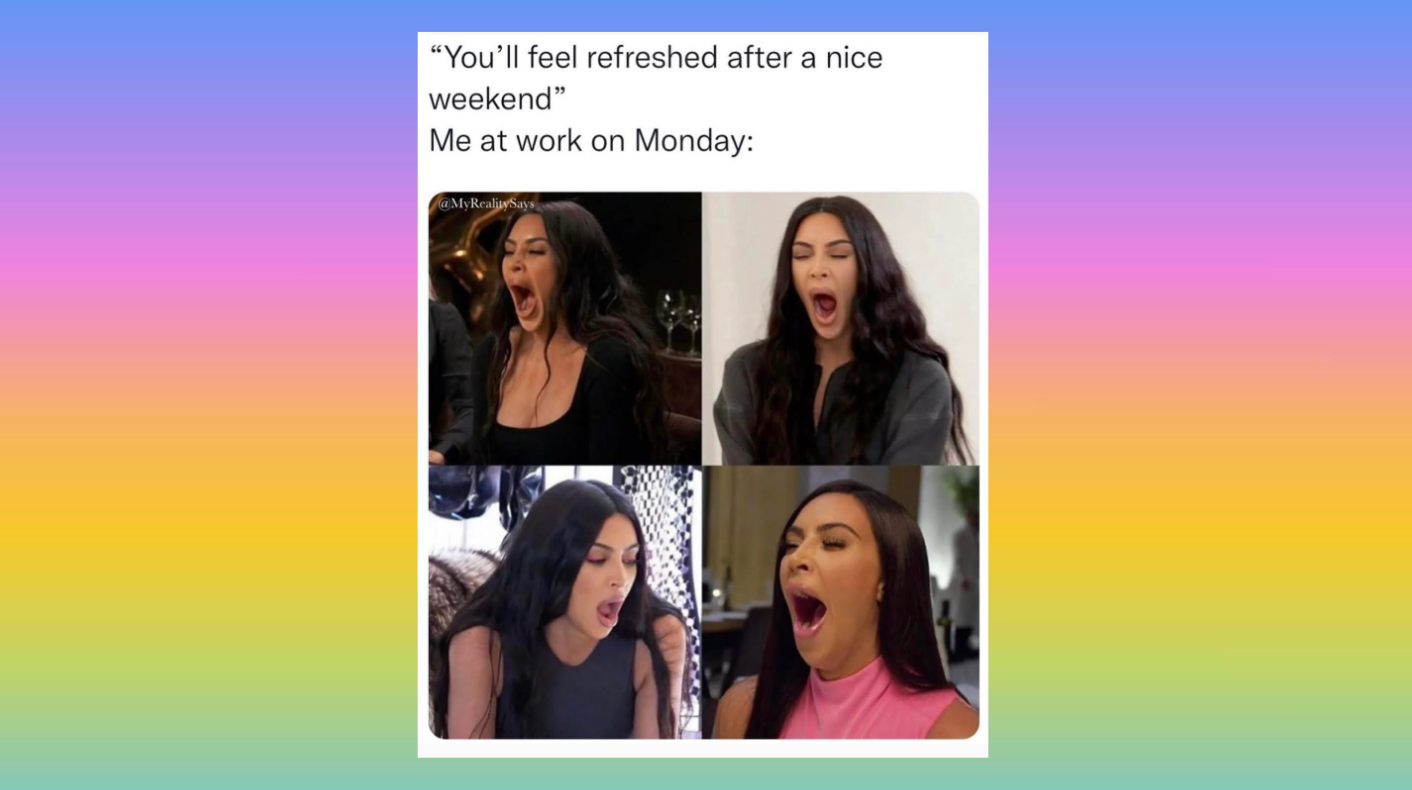
In this digital exhibit, the object of study that will be observed is the meme culture, human-created memes, AI-generated memes, and the comparison between human-created memes and AI-generated memes. It’s important to look at it from a creative space, since AI has been affecting artists, where their art has been stolen, and they aren’t given any credit. AI generative art definitely raises questions of whose art this could have been stolen from, and thinking about how it can get more views and cultural engagement. I will specifically look into the internet subsection from Twitter, using Grok AI images, which will provide a better understanding of what AI memes can look like and how the public socially interacts with them. I will also look at memes from a political point of view and a pop cultural perspective, which would allow room for discussion of the intersection between both topics. The research methods that I will be using include visual content analysis, comparative studies method (Human vs. AI), and research-based scholarly sources that will provide a better understanding of the meme culture. What is interesting to note is that with AI being updated every day, it will be difficult to find recent articles on AI-generated memes, so keep in mind that there will be a research gap in that aspect. The theoretical approaches that I will be using include semiotics, a cultural studies approach, and posthumanism. The research question for this paper is, if AI-generated memes are visually indistinguishable from human-created memes, what does that mean for authorship, creativity, or cultural meaning? Although AI-generated memes can replicate the visual intricacy of human-made memes, they raise questions about authorship, cultural engagement, and the history of visual humour, challenging common assumptions about creativity in meme culture.Fig.1 Kim Kardashian meme from the Instagram account @mytherapistsays
Historical Understanding of what Memes are
To understand the history of memes, it would be useful to understand how the word came about and what it means. The word “meme” was coined by British evolutionary biologist Richard Dawkins in his 1976 book, “The Selfish Gene,” and he derived it from the Greek word “mimeme,” which means “something imitated.” From Richard’s understanding, a meme is a unit of cultural information that’s spread by imitation. These units of cultural transmission include ideas, behaviours, styles, or practices that spread through imitation within a culture (Selfish Meme). In the 21st century, meme culture started becoming popular on social media platforms, such as Twitter, Reddit, Instagram, TikTok, Facebook, and Discord. The one platform that does well with meme culture is Twitter, since memes go viral on there very quickly. These popular memes on social media typically consist of an image and short text that provides some context for viewers to relate to and share with communities. Memes can also come in the form of videos or GIFS, which might also include some type of text that can usually be humorous in nature. An example can be seen in Figure 1, where a simple image and text meme is shown, where the text is labelled at the top, and the image is right beneath it. The image itself would be confusing for people to understand what is going on, but with the text at the top, it provides context to people and allows space for relatability and sharing humour.Fig.2 Meme from X (formerly known as Twitter) account @RespectfulMemes
Cultural Engagement
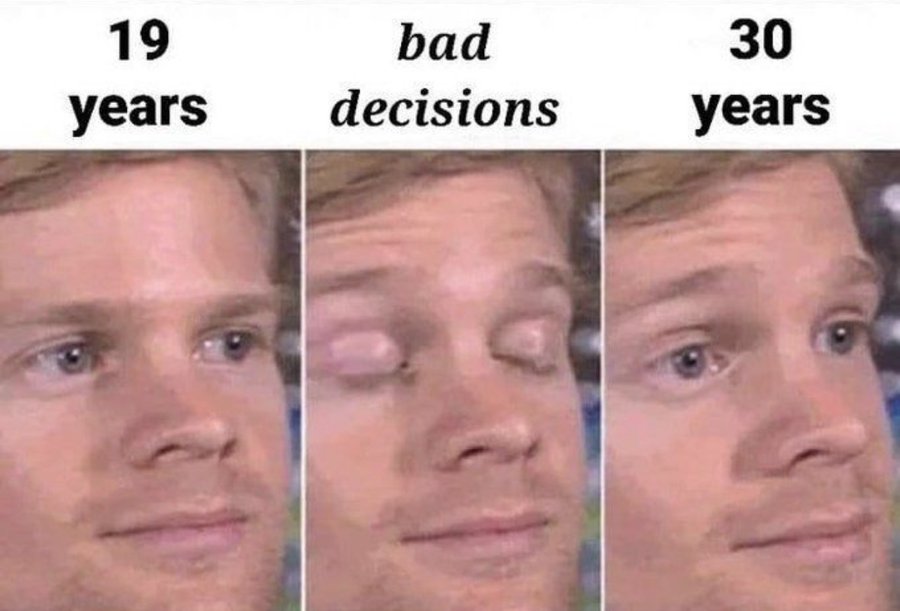
Moreover, human-created memes aren’t just about putting text and image together in a template, but it’s also about the intentions and cultural understanding, whether that’s from popular culture, as shown in Figure 1, where people, especially younger audiences, can recognize these celebrities. It can also be seen in internet culture, like brainrot, political beliefs, niche communities, and social and historical issues. An example of a popular brainrot on social media is called “Italian Brainrot (IBR), which appeared in March 2025, evolved this sensibility into artificial intelligence (AI)-generated shortform memes on platforms such as Instagram, featuring surreal characters, chaotic visuals, pseudo-Italian gibberish, and glitch distortions” (Ungureanu 1) suggesting that older meme culture has been evovled, where technology usage like AI has come into play. As well as the usage of templates and AI, timing is also another important factor when it comes to posting memes, because if it’s relevant and trending during that time, then it will go viral and spread more rapidly to many communities. What makes human-created memes unique and special is that these memes are created from cultural awareness and original lived experiences.
An example of this can be seen in Figure 2, where a meme about life decisions throughout a person’s age is posted on Twitter, and many people are liking, sharing, and commenting under the post, which demonstrates that many people relate and say how they also share the same experiences. What this says is that meme culture allows people to communicate, relate, and laugh with each other on cultural experiences and that “memes are enjoyable, because they resonate on an emotional level and reflect some audiences’ socio-political and cultural realities, even if these recipients will ultimately not share them” (Zündel 5) indicating that its about cultural awareness, the lived experiences and a feeling of connection and community. It’s not just about the technical skills and tools when it comes to creating such memes, but it also brings people together and starts conversations.What is AI, How Does it Work & What are the Risks?
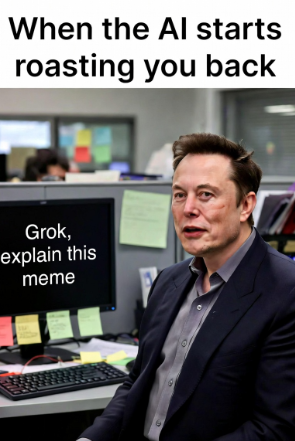
One of the most evolving and trending topics in technology is AI, also known as artificial intelligence. AI is a technology that allows computers and machines to stimulate human learning, understanding, problem-solving, decision-making, creativity, and automation (Stryker and Kavlakoglu). Such applications and devices connected with AI can observe and identify objects. They can comprehend and reply in human language, can make recommendations, learn new information, and act on their own without human intervention. However, in recent years, from 2024, researchers have been focused on something called generative AI, which is technology that creates original text, images, videos, and many other forms of content.Fig.3 Grok AI meme from Twitter of Elon Musk
In this paper, I’m focusing on generative AI, and what it does is train data to create a foundation for models. The most common type of model is called large language models (LLMS), which are made for text applications, but there are also applications for image, video, and music as well. Some of the types of generative AI models include ChatGPT, GANs for images, and Grok from Twitter, which can generate realistic-looking AI images. An example of a Grok AI meme can be seen in Figure.3, where we can see a realistic image of Elon Musk looking at us while on his computer screen, which reads “Grok explain this meme.” However, with all of these interesting and robotic aspects in AI technology, there are also risk factors, harms, and ethical considerations.
Using AI opens the public to risks of data poisoning and cybersecurity issues, as well as model, operational, and legal risks. In terms of harms, one of the biggest is the environmental impact, where huge amounts of water are consumed for cooling data centers, and electronic waste from hardware upgrades. As for ethical considerations, using AI can create bias and societal stereotypes, but also raise considerations in education settings when over-reliance on AI occurs. Some of those include cheating, plagiarism, and not being able to think critically, or losing human interactions, like with peers and teachers. In terms of creative space, AI hugely impacts the arts and takes away the credibility of many artists who have meticulously hand-drawn artwork for years, just to find out that their work has been stolen. Adding on, “while humans need years of training to develop the artistic skills sufficient for creating a genuine artwork and then need hours, days, or longer to create an artwork itself, generative AI, once provided with sufficient data and resources, can learn the skills and create an artwork in much less time” (Malecki et al. 5411) suggesting that using AI tools to create artwork is more time efficient yet the results are not original. All this to say is that while AI can create new information and help people very quickly, it’s important to be aware that generative AI won’t always be fully accurate and can cause more harm than good, and in the end, it comes back to the idea that if AI can replicate form, it still lacks cultural engagement.Visual Comparison
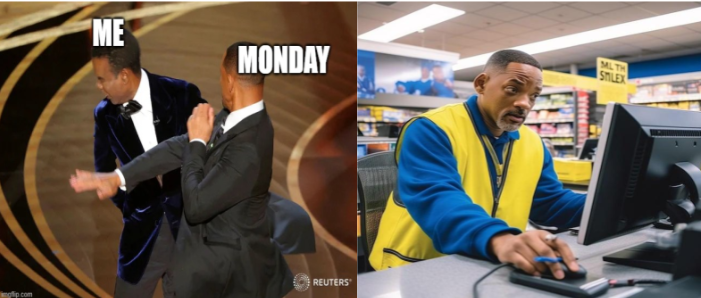
To compare and contrast human-created and AI-generated memes, it would be crucial to gain a visual understanding of both, rather than relying on reading words in this paper. In that note, I will be comparing two memes in this section, side by side, and providing detail and analysis in terms of layout, font, image choice, and composition.Fig.4 Left side: Human-created meme from the Imgflip website of Will Smith slapping Chris Rock, demonstrating a Monday meme. Right side: AI-generated image of the celebrity Will Smith if he weren’t famous and is working at Best Buy, posted on the Know Your Meme website
As shown above in Figure 4, on the left side, we have the human-created meme, where the popular celebrity, Will Smith, is slapping Chris Rock at the Oscars, which has become a viral meme, and in this case, Chris is representing the viewers, while Will is labelled with Monday. Meanwhile, the image on the right depicts a realistic image of Will Smith working as an employee at Best Buy, but it’s AI-generated. In terms of layout, the human-created meme offers the typical image and text version, where short text is provided normally at the top, providing context, while beneath it is the main visual attraction for viewers. It’s been used from a meme template called Imgflip, where people get to pick and choose what image they want to use and can insert whatever text they want that fits well with the theme. As for font, in most cases, the style and size are likely to be like this in memes, which provides a clear and eye-appealing message overall. The image choice for this meme goes perfectly with the text, because the first thing that comes to viewers' minds is the slap from Will, and Will is labelled as Monday. People from different communities, and globally, are able to relate to this one common feeling about Monday, which in this case, can refer to workday, and so in a way, it creates a sense of humour as well as being able to relate with one another. As for composition, there really isn’t much color, shape, or texture going on, but it can be seen in the right side of the meme.
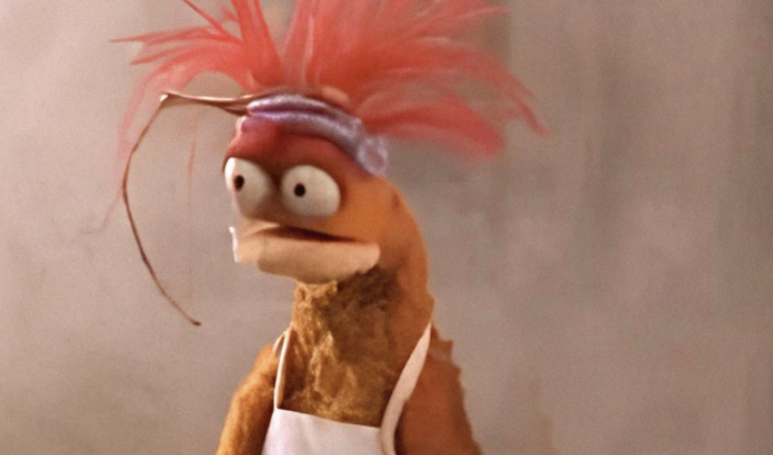
If we are comparing it with the generative AI meme, it depicts a very realistic image of Will Smith looking concerned at a computer screen in Best Buy. In this meme, the texture and quality of the image can be seen more smoothly, but also brighter in terms of lighting and color. Even though the generative AI meme of Will Smith looks like it has more AI aspects, such as smoother and brighter features, it is still depicted as a realistic image of Will Smith. Something to keep in mind is that “ memes are nuanced, subtle, and interpretive; AI-images, on the other hand, are an exact representation of a user-generated text prompt” (Petruk 102), indicating that someone who creates a racist, violent, or hateful AI image has to make sure they produce a precise and thorough text prompt to reach the outcome. Human-created memes and generative AI memes can almost look identical, and so, in that understanding, it comes back to the claim about visual indistinguishability, where it comes to a point that AI memes can be hard to tell apart from human-created memes. Additionally, visual similarity can’t always guarantee the same meaning.Fig.5 Pepe the King Prawn meme posted on 24 Memes That Kept Us Laughing Through 2024
Human Humour in Memes
One of the aspects that makes memes enjoyable for everyone is their humour, and so some of the points that highlight humour in memes include irony, relatability, cultural references (eg, trends, events, etc.), and emotional resonance. An important point to note is that human humour depends on shared social experience, and that can be seen in this meme example above in Figure 5, showing Pepe the King Prawn from The Muppets show. The Pepe the King Prawn meme has taken over TikTok and is used in TikTok carousels, where people share the insane stories that have happened to them, and in a way, people are able to share such crazy moments in their lives while also getting a laugh out of it with many others. This creates social shared experiences, where people can comment, share, and relate to each other’s stories. Furthermore, this is the reason why cultural engagement is so important, because with human humour, people can connect and build communities by sharing memes.
AI Humour in Memes
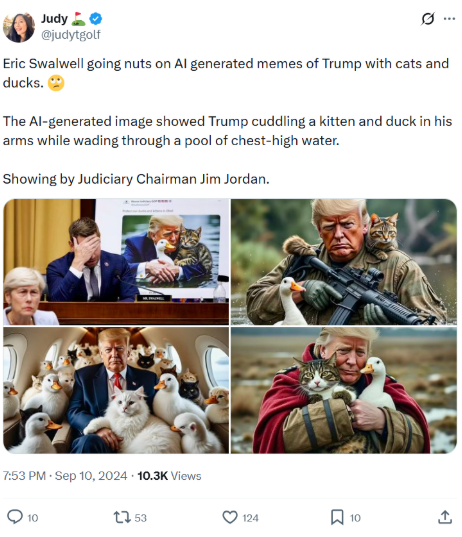
As for AI humour in memes, it can be nonsensical, overly literal, and sometimes accidentally funny. This is because AI-generated memes don’t provide any real-world experience, nor do they provide any emotional context. Most of the time, when generating AI memes, the memes would output only images and no text. This can be highly seen in Grok AI, Twitter, where high-quality-looking images can be generated, yet there is no context for viewers. An example of this can be seen in a Trump AI-generated meme posted on Twitter, shown below in Figure 6.Fig.6 AI-generated memes of Trump with cats and ducks
As one could see, these AI-generated memes gained quite the likes, shares, and commentary, where people were laughing, suggesting that AI memes can be funny and start social and in this case, political conversations with people; however, AI can mimic humour but doesn’t participate in it, because knowing that this is AI, we know that there aren’t any shared or lived experiences in this meme, whether that’s from a cultural, political or social perspective. In the end, it just brings people to laugh at something that isn’t real.Fig.7 Meme template examples
Human Authorship
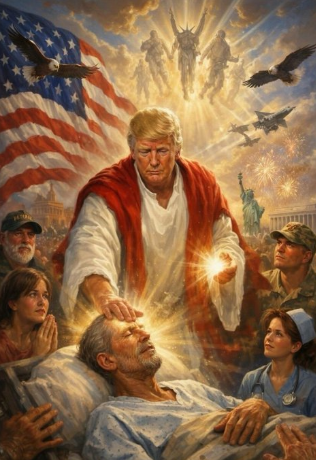
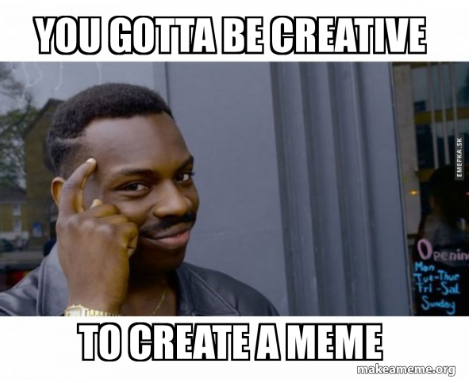
One point mentioned in the research question was authorship. If we are talking about human authorship for memes, it becomes complicated because a single individual doesn’t own memes; instead, memes are built through remixing, reposting, and reinterpretation. A single image and text might start with one creator, but the same meme can be developed by many other creators, adapted to new contexts, adding humour and cultural references. An example can be seen in Figure 7, where multiple meme templates are given on the website called Meme Generator. Additionally, since there have been so many adaptations, it’s difficult to trace back to the original creator of the meme, but what we do know is that it’s human-centered. Each meme reflects human decisions, cultural awareness, and social interactions, demonstrating that while authorship can be hard to tell, it’s not absent since networks of human participation have been involved.Fig.8 AI-generated meme of Donald Trump posted on Twitter @TrumpTruthOnX
AI Authorship
If we compare human authorship in memes with AI authorship in memes, it’s completely different because, instead of real human contributions, AI tools are taking their place, providing no real connection. While authorship in human-created memes involves human networks, AI-generated memes are created by AI models like GANs, LLMs, and Grok. Using such tools can definitely raise ethical concerns of originality and who is being given credit. Moreover, with ongoing AI memes taking over the internet, political AI-generated memes have been going viral on platforms like Twitter, and an example can be seen with Donald Trump in Figure 8. In this AI-generated meme of Donald Trump, it appears that Donald is depicted as Jesus, where it seems to look like he is healing a person who resembles Jeffrey Epstein lying down on a bed. We can also see that they are both surrounded by people, including a nurse, a girl praising, and soldiers, and in the sky, we can see the American flag, with eagles soaring, military aircraft, and in the middle of the sky, we can see five individuals lined up all together looking like angels.
This one post on Twitter has gained 4.2k likes, 1.3k reposts, 1.1k saved, and 3.3k comments. In the comment section, multiple people have taken this image, used AI again, and edited it in different versions, and some have even made them mock Trump in a way. One of the first replies was someone posting an AI image of Jesus stepping on Donald Trump’s head. In another comment, someone posted an AI image of the devil healing Trump. These interactions include the human connection through humour; however, it still disrupts traditional ideas of authorship, since people are using AI to edit the meme.
What about Creativity?
The real question now is, if AI can replicate memes, then does that mean creativity is a form of imitation? Human creativity is known for showcasing personal experiences because that’s what makes an individual unique, through their emotions, memories, cultures, and beliefs. Meanwhile, what AI does is that it takes many of the human experiences and combines them into something that is not raw or authentic. Yet, the outputs made from AI can sometimes look surprisingly similar, and so AI challenges us to rethink what creativity truly is.Final Thoughts
Overall, meme culture has and probably will continue to evolve through the forms of human connections, cultural references, and political viewpoints. Combining with the usage of AI, whether memes become less meaningful or not will depend on the meme itself and the reactions it gets from the public. AI-generated memes challenge traditional assumptions about creativity in meme culture by raising issues regarding authorship, cultural involvement, and the history of visual humor, even though they may imitate the visual complexity of human-made memes. I will leave my final thoughts here, saying that AI-generated memes not only change the meme culture but also change how we understand what creativity means.Images in this online publication are either in the public domain or are being used under fair dealing for the purpose of research and are provided solely for the purposes of research, private study, or education.
Works Cited
Malecki, W. P., et al. “The Impact of Exposure to Generative AI Art on Aesthetic Appreciation, Perceptions of AI Mind, and Evaluations of AI and of Art Careers.” New Media & Society, vol. 27, no. 9, Sept. 2025, pp. 5410–32. DOI.org (Crossref), https://doi.org/10.1177/14614448251344590.
Petruk, Alex. “Memes vs. Machines: Comparison of AI-Generated Images vs. Traditional Memes in Right-Wing Social Media Discourse.” Crossings: An Undergraduate Arts Journal, vol. 5, no. 1, Sept. 2025, pp. 99–114. crossingsjournal.ca, https://doi.org/10.29173/crossings324.
Ungureanu, Daniel. “Overload Opacity: Countervisuality and Glitch Aesthetics in AI-Generated Brainrot on Instagram.” Discourse, Context & Media, vol. 69, Feb. 2026, p. 100972. ScienceDirect, https://doi.org/10.1016/j.dcm.2025.100972.
Zündel, Jana. “Undetectable Participation in Meme Culture – Meme Audiences between Interpassivity and Emotional Gratification.” Popular Communication, Nov. 2025, pp. 1–19. DOI.org (Crossref), https://doi.org/10.1080/15405702.2025.2593440.
Other Sources
“Meme Culture in Social Media Marketing in 2026: How Brand Accounts Are Leaning into the Success.” Pulse Advertising, 8 Nov. 2025, www.pulse-advertising.com/resources/social-media-news/meme-culture-social-media-marketing-2026/.
Meme, Selfish. “The History of Memes: From Evolution to Internet Culture.” Medium, 6 Oct. 2025, medium.com/@selfishmeme/the-history-of-memes-from-evolution-to-internet-culture-c35ea6c0e185.
Stryker, Cole, and Eda Kavlakoglu. “What Is Artificial Intelligence (AI)?” IBM, 9 Aug. 2024, www.ibm.com/think/topics/artificial-intelligence.