Early Fashion Advertising
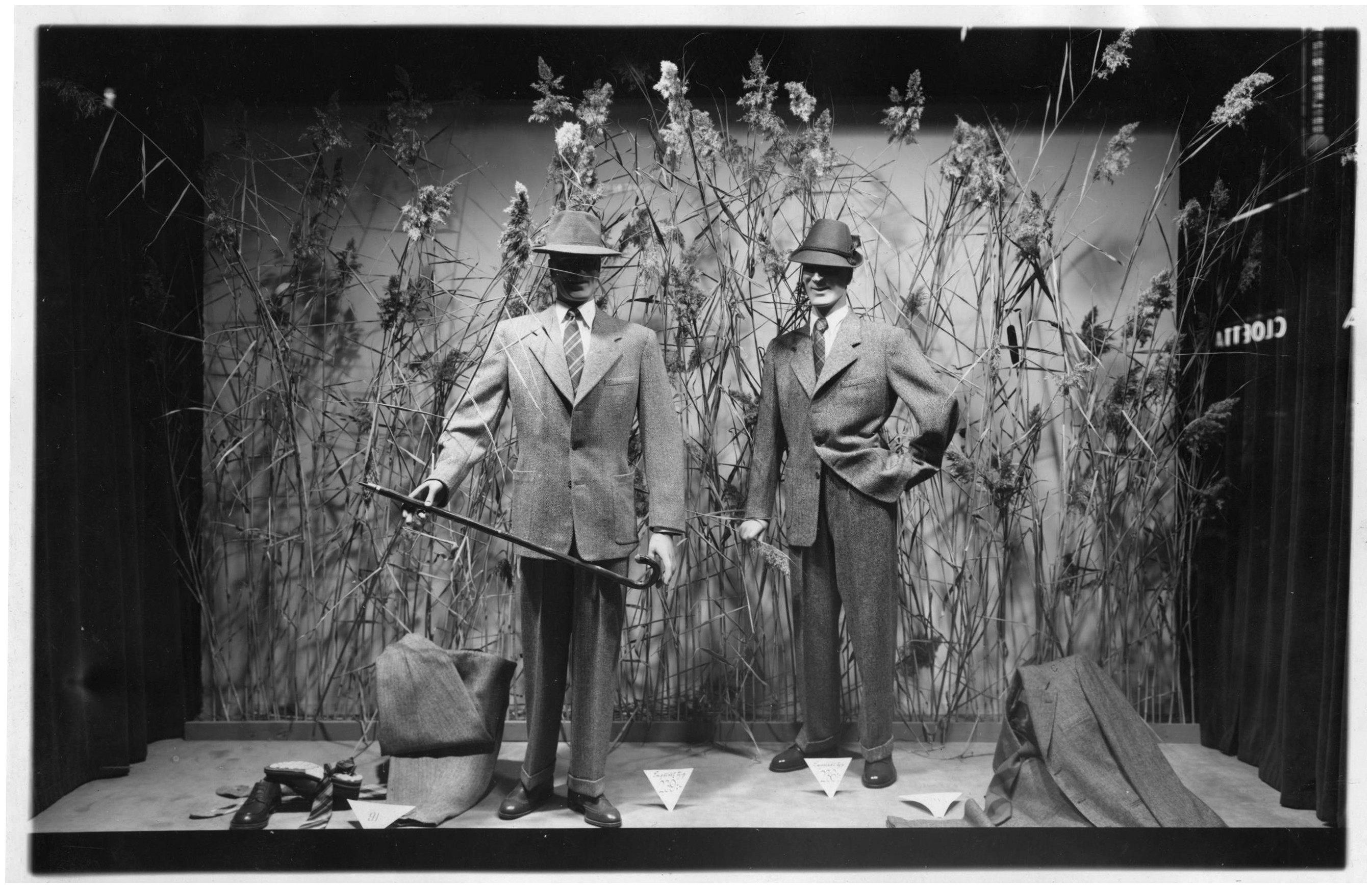
Gender imbalances in fashion advertising date back to 1930’s mannequin displays. At first glance mannequins simply display clothing, truthfully “mannequins’ nonverbal communication gave the observers instructions on how to behave” (Engdahl and Gelang 9) according to societal values. The poses and activities of the displays were intentionally set to put male mannequins in a dominant societal position by using nonverbal communication, “their high status postures express a self-confident persona and support an ethos of power and authority” (Engdahl and Gelang 12).
In order to truly strengthen this patriarchal culture, women had to be displayed in more ‘loose’ circumstances. Contrary to male mannequins, females were positioned in less serious leisure activities that Engdahl and Gelang describe as “graceful, pleasant and sensual, that together support an ethos of viability and strength but lack power” (13). The harm of these displays lies in the subtle communication that maintains an authoritative position for men, and a submissive position for women. During this era, gender imbalances were strengthened as “the display windows were a location where society’s ideals of masculine and feminine reinforced. In this way, the mannequin takes part in creating and solidifying what we, for instance, experience as masculine and feminine nonverbal communication” (Engdahl and Gelang 9). In today’s technological world, this communication in fashion advertising has shifted from window displays, to on-screen advertisements. Although the format of communication has changed, the message remains rooted in a patriarchal mindset. Just as the historical message sought to create a gender power imbalance, the modern message is consistent in positioning gender roles. This early example is not necessarily where sexualization was prominent, however it laid the foundation for representing women submissively.
Images in this online publication are either in the public domain or are being used under fair dealing for the purpose of research and are provided solely for the purposes of research, private study, or education.
This page has paths:
- “Sex Sells” At What Cost? Zara Khokhar